







What's Happening?
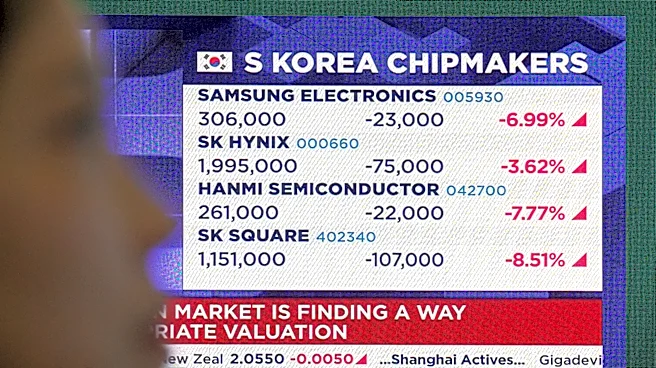
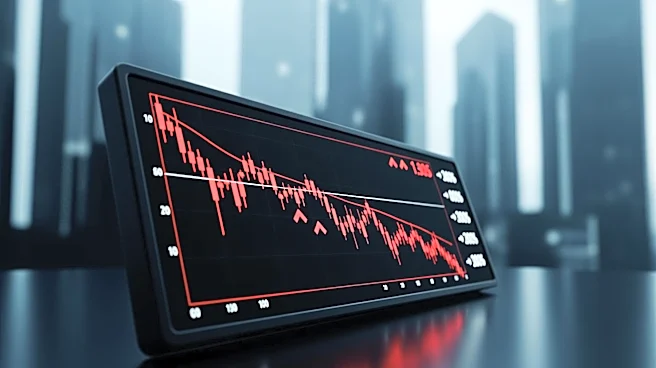
A significant selloff in technology stocks has occurred across global markets, particularly impacting Asian tech stocks, as investors react to the reversal of a previously strong AI rally. This downturn was notably severe in South Korea, where the KOSPI
index fell by more than 8%, triggering circuit breakers. The selloff follows a similar trend on Wall Street, where a robust U.S. jobs report heightened expectations for Federal Reserve interest rate hikes, which are generally unfavorable for growth stocks. The market is now anticipating a more than 70% chance of a rate hike by the Fed in December, a significant increase from the previous week's 45% probability. The recent nonfarm payrolls report, coupled with disappointing earnings from tech giant Broadcom, has contributed to the decline in tech stock prices. Analysts have largely viewed this selloff as a 'healthy correction,' though the duration of this market adjustment remains uncertain.
Why It's Important?
The selloff in tech stocks is significant as it reflects broader market concerns about the impact of potential interest rate hikes by the Federal Reserve. Higher interest rates can increase borrowing costs and reduce the attractiveness of growth stocks, which rely heavily on future earnings. This market reaction underscores the sensitivity of tech stocks to economic indicators and monetary policy changes. The decline also highlights the risks associated with high market expectations, where even minor disappointments can lead to substantial market corrections. The situation is further complicated by geopolitical tensions, such as the ongoing conflict in the Middle East, which can influence global economic stability and investor sentiment. The outcome of these developments could have far-reaching implications for investors, tech companies, and the broader economy.
What's Next?
Investors and market analysts will be closely monitoring upcoming economic data releases, including U.S. inflation figures, which could further influence Federal Reserve policy decisions. Additionally, geopolitical developments, particularly in the Middle East, may continue to impact market stability and investor confidence. The tech sector will also be under scrutiny as companies release their earnings reports, which could either exacerbate or alleviate current market concerns. Stakeholders will be watching for any signs of intervention from central banks, particularly in Japan, where the yen's decline has raised the possibility of government action to stabilize the currency.