
What's Happening?
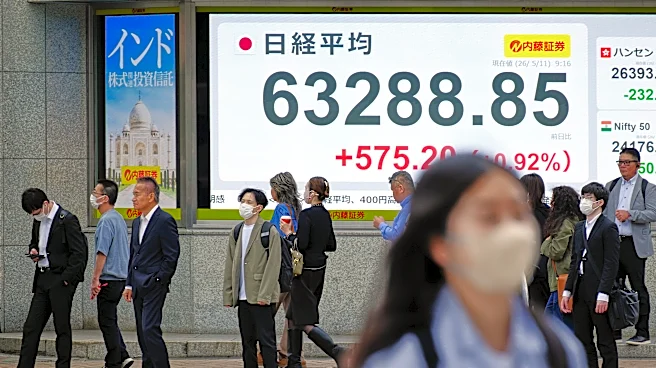
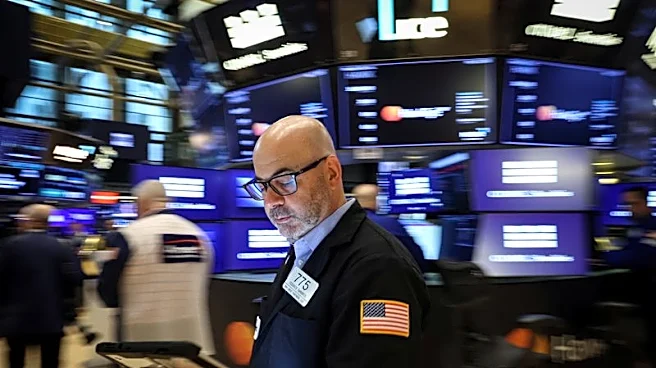
On Monday, Wall Street futures showed a cautious trend as investors reacted to the stalled negotiations between the United States and Iran. The impasse has led to a surge in oil prices, with crude rising
nearly 3%, as concerns grow over the potential for prolonged conflict affecting the Strait of Hormuz. Despite recent record highs in the S&P 500 and Nasdaq, driven by strong corporate earnings and a solid payrolls report, the market is now facing uncertainty. Investors are particularly focused on the upcoming consumer price index data, which is expected to reflect increased inflation due to the conflict's impact on energy prices.
Why It's Important?
The stalled talks between the U.S. and Iran have significant implications for the global oil market and the U.S. economy. Rising oil prices can lead to higher costs for businesses and consumers, potentially slowing economic growth. The situation also affects airline stocks, as higher fuel costs threaten profit margins. Additionally, the uncertainty surrounding the conflict could impact investor confidence and market stability. The upcoming meeting between President Trump and Chinese President Xi Jinping, where they will discuss critical issues including Iran, could further influence market dynamics. The outcome of these discussions may either alleviate or exacerbate current tensions, affecting global trade and economic relations.
What's Next?
Investors will closely monitor the consumer price index data and other economic indicators due later in the week, such as producer prices and retail sales figures, to gauge the broader economic impact. The meeting between President Trump and President Xi Jinping is also pivotal, as it could lead to developments in U.S.-China relations and influence the geopolitical landscape. Market participants will be keenly watching for any signs of progress or further escalation in the U.S.-Iran conflict, which could have lasting effects on global markets and energy prices.