







What's Happening?
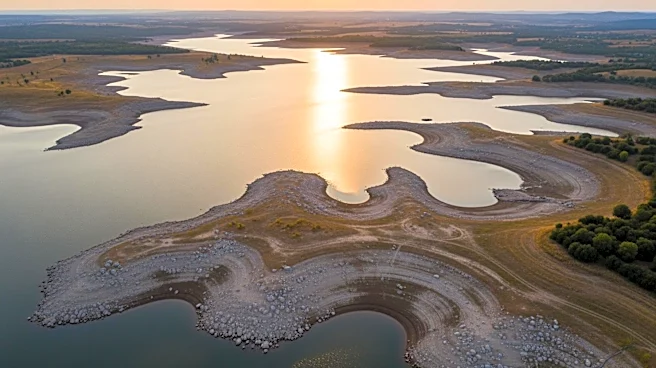
Tech companies like Amazon and Google are addressing concerns over water usage by their data centers, particularly in areas of the U.S. facing high water scarcity. A report highlights that 40% of planned and existing data centers are located in regions
with significant water stress. Amazon has reported withdrawing 2.5 billion gallons of water globally in 2025, a figure that, while large, is small compared to other water-intensive activities in the U.S. The company is implementing measures to reduce water usage, such as running data centers at higher temperatures. Additionally, Amazon is funding 50 water projects to return over 5.8 billion gallons of water annually to local communities. Google has also announced 165 water stewardship projects aimed at replenishing more than 19 billion gallons of water annually by 2030.
Why It's Important?
The expansion of data centers in water-scarce regions poses a significant challenge to local water resources, potentially exacerbating existing water shortages. The proactive measures by tech giants to manage water usage and invest in replenishment projects are crucial for sustainable operations and community relations. These efforts reflect a growing awareness and responsibility among major corporations to address environmental impacts. The initiatives could set a precedent for other industries to follow, promoting a balance between technological advancement and environmental stewardship.
What's Next?
As data center demand continues to grow, further innovations in water efficiency and sustainable practices are expected. Stakeholders, including local governments and environmental groups, may increase pressure on tech companies to ensure responsible water management. The success of current projects could lead to expanded efforts and collaborations with local communities to address broader water scarcity issues. Monitoring and reporting on the effectiveness of these initiatives will be critical in assessing their impact and guiding future policies.