
What's Happening?
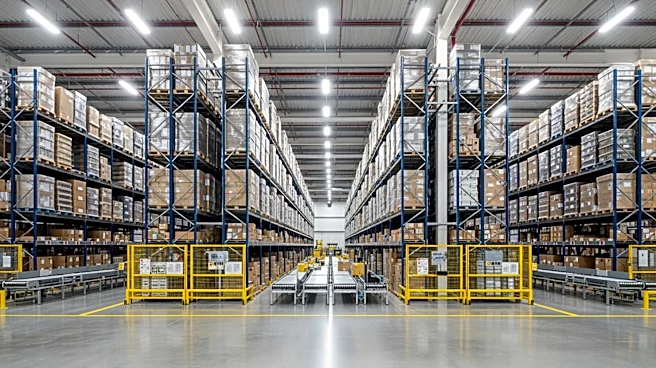
Target has inaugurated a new upstream warehouse in Houston, Texas, designed to enhance its supply chain efficiency by adding storage capacity earlier in the supply chain for select imported goods. The
facility, which cost $265 million to build, spans 1.2 million square feet and serves as a 'receive center' where products from global vendors are stored until needed downstream. This strategic move aims to prevent overcrowding in distribution centers and store backrooms by replenishing inventory based on consumer demand. The Houston warehouse will support six regional distribution centers and one flow center, focusing on items that are seasonal, bulky, or have long lead times. The facility's location in Houston complements Target's import warehouses in Georgia and Washington, optimizing the company's nationwide distribution network.
Why It's Important?
The opening of this warehouse is a significant step in Target's strategy to improve its supply chain operations and reduce delivery times. By centralizing storage and optimizing inventory management, Target can better respond to consumer demand, particularly for high-demand items like holiday toys. This move is part of a broader $100 million project to expand Target's sortation centers across the U.S., aiming to increase the number from 11 to 15 by the end of 2026. The enhanced supply chain capabilities are expected to boost Target's competitive edge in the retail market, potentially leading to increased sales and customer satisfaction. Additionally, the facility will create 185 new jobs, contributing to the local economy in Houston.
What's Next?
Target plans to continue expanding its supply chain infrastructure, with a focus on increasing the number of sortation centers and enhancing next-day delivery capabilities in 20 new U.S. metro areas. The company will likely use data from the Houston warehouse to refine and improve future facilities, ensuring even greater efficiency and effectiveness in its supply chain operations. As Target continues to invest in its logistics network, it may face competitive pressure from other retailers to adopt similar strategies to enhance their own supply chain capabilities.