









What's Happening?
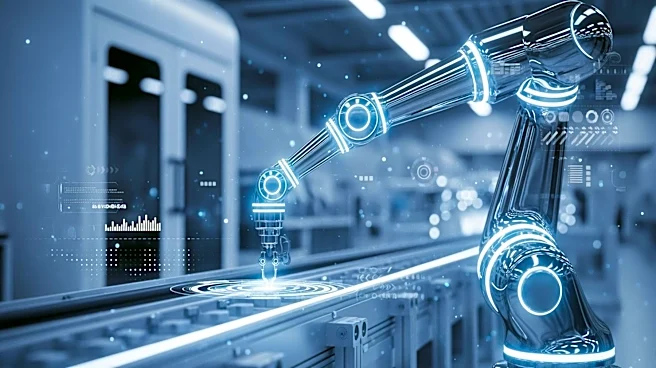
Massimiliano Moruzzi, CEO of Xaba.ai, argues that industrial AI should be trained on physics rather than prompts to ensure reliability in manufacturing environments. Current AI systems, often based on prompt-driven models, excel in language processing
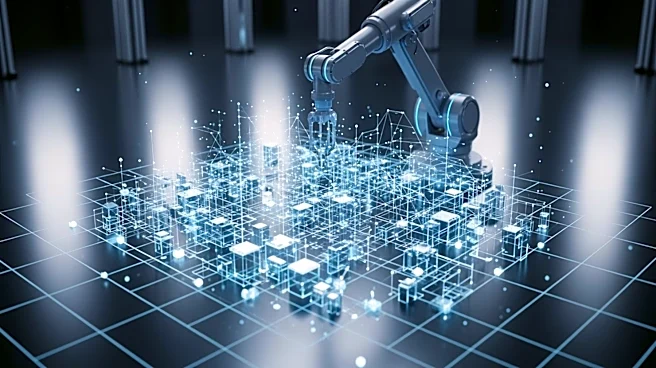
but fall short in physical systems where precision is crucial. In manufacturing, errors can lead to halted production lines, damaged equipment, or safety hazards. Moruzzi emphasizes that AI must understand physical principles like force and torque to make real-time adjustments in production. This approach contrasts with traditional programming, which relies on predefined instructions and struggles with variability.
Why It's Important?
The shift towards physics-based AI in manufacturing is critical for enhancing operational efficiency and safety. As industries face pressure to increase production speed and adaptability, relying on AI systems that understand physical dynamics can reduce downtime and prevent costly errors. This transition could lead to more resilient manufacturing processes, capable of handling real-world variability without human intervention. The implications extend beyond operational improvements, potentially influencing the broader adoption of AI in industrial settings and setting new standards for automation technology.
What's Next?
The development of physics-based AI systems is likely to continue, with companies investing in technologies that integrate real-world data and physical principles. This could involve collaborations between AI developers and manufacturing experts to create systems that can autonomously adapt to changing conditions. As these technologies mature, they may become integral to smart factories, driving innovation in industrial automation. Stakeholders will need to address challenges related to implementation and scalability, ensuring that new AI systems can be seamlessly integrated into existing manufacturing infrastructures.