
What's Happening?
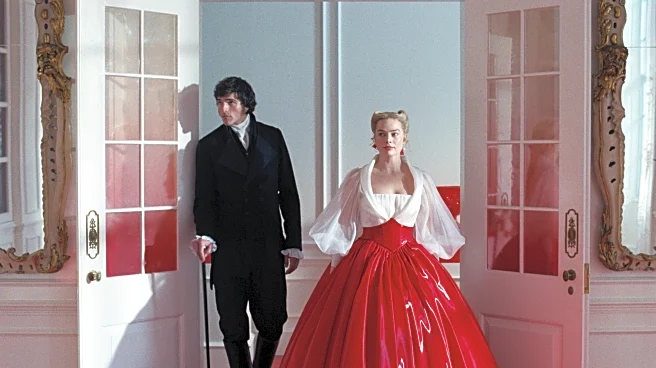
Emerald Fennell's adaptation of 'Wuthering Heights' has sparked a mix of reactions ahead of its release. The film, which focuses on the first half of Emily Brontë's novel, has been noted for its stylistic
choices, including the use of mid-20th century cinematic references. Fennell's version diverges from traditional period accuracy, opting instead for a more cinematic approach that emphasizes visual storytelling over strict adherence to the source material. This creative decision has led to polarized opinions among audiences and critics.
Why It's Important?
The adaptation of a classic novel like 'Wuthering Heights' by a prominent director such as Emerald Fennell highlights the ongoing dialogue between literature and film. Fennell's approach challenges traditional expectations of period adaptations, potentially influencing future projects in the genre. The film's reception could impact how filmmakers approach adaptations of classic literature, balancing fidelity to the source material with creative expression. This debate also reflects broader discussions about the role of artistic interpretation in adapting beloved works for new audiences.