


What's Happening?
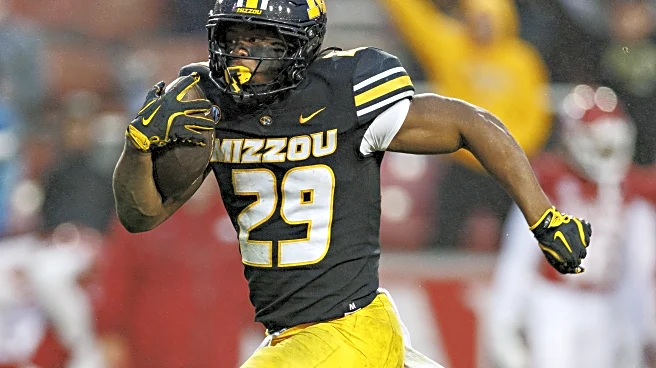
CaDarius McMiller, a four-star running back recruit committed to the Oregon Ducks, recently visited Texas A&M, raising questions about his commitment. McMiller, who has been committed to Oregon since February 14, is a standout player from Tyler High School
in Texas, known for his impressive performance with 937 total yards and 17 touchdowns last season. His visit to Texas A&M, a school closer to his home, highlights the ongoing recruitment dynamics where proximity and NIL (Name, Image, Likeness) opportunities play significant roles. Despite his visit, McMiller remains the only running back committed to Oregon for the 2027 class, a position the Ducks are keen to secure given his potential impact on the team.
Why It's Important?
McMiller's visit to Texas A&M underscores the competitive nature of college football recruiting, where programs vie for top talent by leveraging factors like location and NIL deals. For Oregon, retaining McMiller is crucial as he represents a key component of their future roster, especially in a class with limited running back commitments. His potential departure could impact Oregon's strategic planning and depth at the running back position. Conversely, Texas A&M's interest in McMiller highlights their intent to strengthen their roster with local talent, which could enhance their competitiveness in the SEC. This situation reflects broader trends in college sports where athletes weigh multiple factors before finalizing their commitments.
What's Next?
As McMiller approaches his senior year, his performance and recruitment decisions will be closely watched. Oregon will likely intensify efforts to reaffirm his commitment, possibly through enhanced engagement and showcasing the program's benefits. Meanwhile, Texas A&M and other interested programs may continue to present compelling offers. McMiller's final decision will be pivotal, potentially influencing other recruits and the strategic direction of the involved programs. The outcome will also contribute to ongoing discussions about the influence of NIL and geographic proximity in college sports recruitment.