



What's Happening?
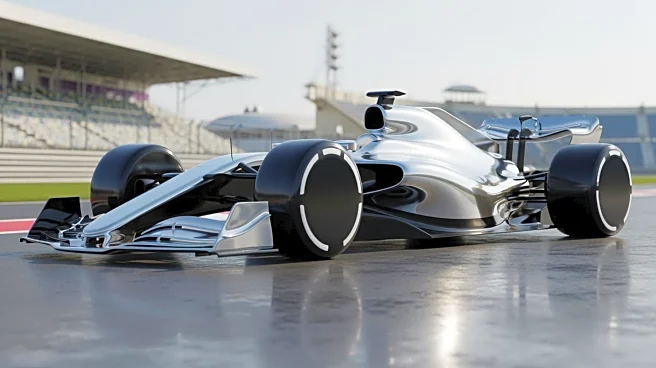
Mercedes has introduced its new Formula 1 car, the W17, at Silverstone, marking its first track appearance. The car completed 200 kilometers during a filming day, with drivers George Russell and Kimi Antonelli sharing 67 laps on the 2.979km International Circuit under wet and cold conditions. This debut follows the online launch of the W17 and its new livery. The car is designed according to the new technical regulations for 2026, which include a significant increase in electrical power output and the use of advanced sustainable fuels. Mercedes plans further testing at the Circuit de Barcelona-Catalunya next week, followed by additional tests in Bahrain before the season opener in Australia on March 8.
Why It's Important?
The debut of the Mercedes W17 is significant
as it represents the team's adaptation to the new 2026 technical regulations, which aim to enhance sustainability and performance in Formula 1. Mercedes, a dominant force in F1 with eight consecutive constructors' championships from 2014 to 2021, is expected to leverage its expertise to maximize the potential of the new power unit. The regulations are set to increase electrical power output threefold, pushing teams to innovate further. Mercedes' role as an engine supplier to McLaren, Williams, and Alpine underscores its influence in shaping the competitive landscape of the sport.
What's Next?
Mercedes will continue testing the W17 at the Circuit de Barcelona-Catalunya, focusing on building upon the initial shakedown and enhancing their understanding of the new car. The team aims to refine its strategies and performance ahead of the season opener in Australia. As the 2026 season approaches, all teams will be adjusting to the new regulations, potentially leading to shifts in competitive dynamics. Stakeholders, including teams and sponsors, will be closely monitoring these developments to assess their impact on the sport's future.
Beyond the Headlines
The introduction of the 2026 technical regulations marks a pivotal shift towards sustainability in Formula 1, reflecting broader environmental concerns within the industry. The emphasis on advanced sustainable fuels and increased electrical power output aligns with global efforts to reduce carbon emissions. This transition may influence other motorsport categories and automotive industries, encouraging innovation in sustainable technologies. The long-term implications could extend beyond racing, impacting vehicle design and energy consumption patterns worldwide.