
What's Happening?
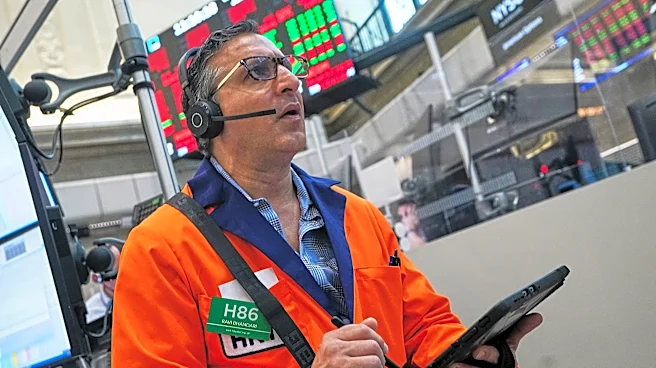
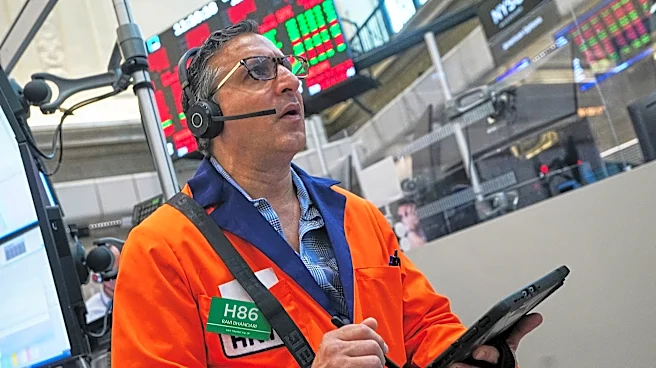
The Nasdaq Composite experienced its largest single-day point drop in history, falling by 1,121.53 points, a 4.18% decline, closing at 25,709.43. This significant downturn was primarily driven by a massive
selloff in the semiconductor sector, which erased over $1 trillion in market value. The Philadelphia SE Semiconductor Index recorded its largest single-day percentage drop since March 2020. Key semiconductor companies such as Marvell Technology, Micron Technology, AMD, and Intel saw substantial declines, with Marvell Technology leading the fall with a 16% drop. Nvidia, despite a 6.2% drop, remains the world's most valuable chipmaker. The selloff was triggered by Broadcom's failure to raise its full-year AI chip sales outlook and a May jobs report that showed 172,000 new positions, leading to higher Treasury yields and reduced expectations for near-term rate cuts.
Why It's Important?
The semiconductor sector is a critical component of the technology industry, and its performance has significant implications for the broader market. The recent selloff highlights the volatility and sensitivity of the sector to market expectations and economic indicators. The decline in semiconductor stocks has contributed to a broader market downturn, affecting major indices like the Nasdaq and S&P 500. This event underscores the interconnectedness of technology stocks and the broader economy, as well as the impact of macroeconomic factors such as employment data and interest rates on market performance. Investors and stakeholders in the technology sector must navigate these challenges and adjust their strategies accordingly.
What's Next?
The semiconductor sector may continue to face volatility as investors assess the impact of economic indicators and company performance on market expectations. Companies in the sector may need to adjust their strategies to address market concerns and improve investor confidence. Additionally, the broader market may experience continued fluctuations as investors react to economic data and central bank policies. Stakeholders will be closely monitoring developments in the semiconductor industry and broader economic indicators to inform their investment decisions.