

What's Happening?
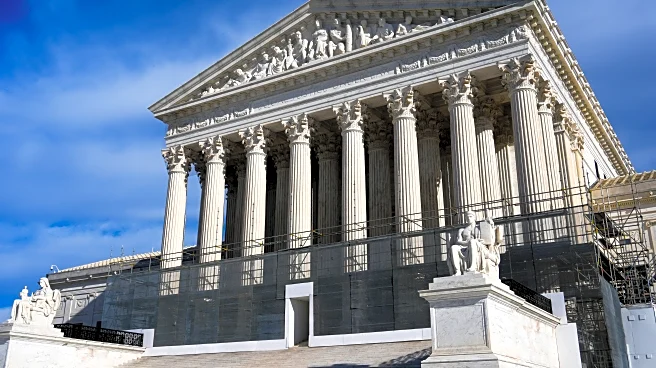
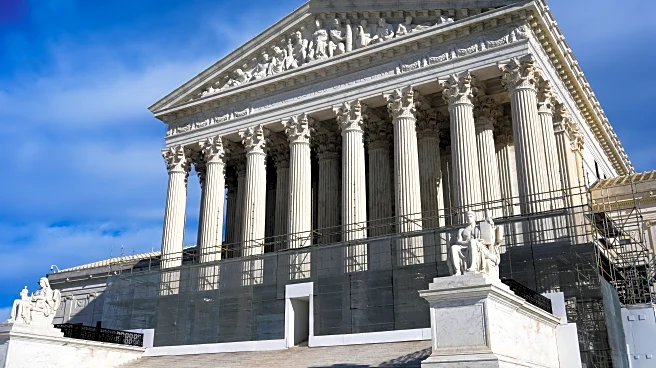
President Trump has announced a new set of tariffs following a U.S. Supreme Court decision that struck down previous tariffs imposed under the International Emergency Economic Powers Act. The new tariffs, set at 10% and expected to rise to 15%, are part
of an executive order signed by Trump. This move has caused global trade officials, from South Korea to South America, to reassess their trade strategies with the United States. The tariffs will impact various sectors, although some exports like automobiles and steel remain unaffected. French President Emmanuel Macron commented on the situation, emphasizing the importance of checks and balances in democracies. Meanwhile, businesses in Mexico and other countries are evaluating the potential impact on their operations, with some U.S. importers seeking possible refunds for excess tariffs paid under the previous regime.
Why It's Important?
The imposition of new tariffs by President Trump is significant as it affects global trade dynamics and could lead to economic uncertainty. Countries that rely heavily on exports to the U.S., such as Mexico, are particularly vulnerable. The tariffs could disrupt supply chains and increase costs for businesses, potentially leading to higher prices for consumers. The move also highlights the volatility in U.S. trade policy, which can create challenges for international businesses trying to plan and invest. The potential for tariff refunds adds another layer of complexity, as companies may seek compensation for overpayments, impacting financial planning and operations.
What's Next?
Countries affected by the new tariffs are likely to engage in diplomatic discussions with the U.S. to seek exemptions or negotiate new trade terms. Mexico's Economy Secretary Marcelo Ebrard plans to visit the U.S. to discuss economic relations. Businesses will continue to analyze the impact of the tariffs and may adjust their strategies accordingly. The situation could lead to further legal challenges or negotiations aimed at reducing the tariffs or finding alternative trade solutions. The global business community will be closely monitoring any developments or changes in U.S. trade policy.
Beyond the Headlines
The new tariffs could have long-term implications for international trade relations and economic policies. They may prompt countries to seek new trade alliances or strengthen existing ones to mitigate the impact of U.S. tariffs. The situation also raises questions about the role of international trade agreements and the ability of countries to navigate complex trade environments. Additionally, the tariffs could influence domestic politics in the U.S., as businesses and consumers react to potential price increases and economic uncertainty.