







What's Happening?
FIFA, the governing body of international soccer, has been at the center of both the sport's development and numerous controversies. Established in 1904, FIFA has organized the World Cup since 1930, making it the most significant event in the sport. The
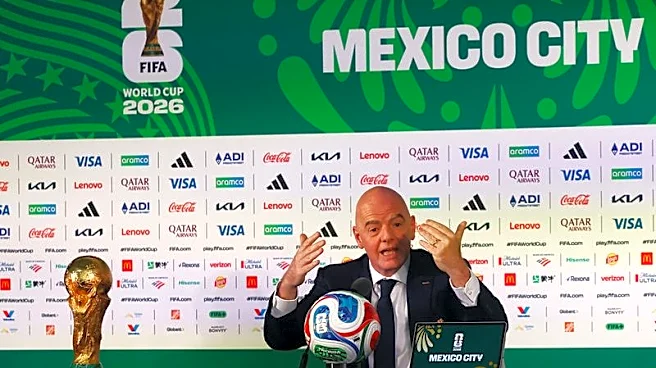
organization, headquartered in Zürich, Switzerland, has expanded the men's World Cup to 48 teams for the 2026 edition, which will be hosted across the U.S., Canada, and Mexico. Under the leadership of Gianni Infantino since 2016, FIFA has introduced significant changes, including the expansion of the Club World Cup and the implementation of Video Assistant Referees (VAR). However, Infantino's tenure has been marred by controversies, including his associations with political figures like President Trump and Vladimir Putin, and criticism over human rights issues related to the 2022 World Cup in Qatar.
Why It's Important?
FIFA's decisions have significant implications for global soccer, affecting everything from tournament logistics to international relations. The expansion of the World Cup to 48 teams is a major development, potentially increasing the tournament's global reach and economic impact. However, FIFA's controversies, such as the 'FIFAgate' scandal involving corruption charges against top officials, and the criticism over human rights issues in host countries like Qatar and Saudi Arabia, highlight ongoing ethical concerns. These issues can affect FIFA's reputation and influence public perception of the sport. The organization's handling of these controversies could impact its ability to secure future hosts and sponsors, as well as its relationship with fans and players worldwide.
What's Next?
As FIFA prepares for the 2026 World Cup, it faces scrutiny over its ticket pricing strategy, which has been criticized as excessively high. The organization must address these concerns to maintain fan engagement and ensure the tournament's success. Additionally, FIFA's decision to award the 2034 World Cup to Saudi Arabia will likely bring further attention to human rights issues, similar to those raised during the Qatar World Cup. FIFA's ability to navigate these challenges will be crucial in shaping its future and the global perception of soccer.
Beyond the Headlines
FIFA's controversies underscore broader issues in international sports governance, such as the balance between commercial interests and ethical responsibilities. The organization's decisions can influence global perceptions of host countries, potentially serving as a form of 'sportswashing' for nations with questionable human rights records. This raises questions about the role of sports in international diplomacy and the ethical obligations of governing bodies like FIFA. The ongoing debates around these issues could lead to calls for reform within FIFA and other sports organizations, potentially reshaping the landscape of international sports governance.