








What's Happening?
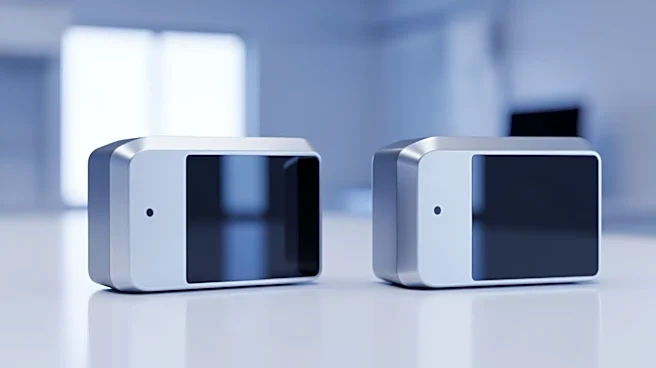
Carestream Healthcare International has announced the launch of its new Lux HD 35 and Lux HD 43 X-ray detectors, designed to improve medical imaging quality. These detectors feature a 100um pixel pitch, offering higher resolution and better image magnification,
which enhances the visibility of small objects and microstructures. The detectors are lightweight and ergonomically designed for easier handling by radiographers, providing a more comfortable experience for patients. They are equipped with advanced technology for wireless operation and efficient dose control, making them suitable for various medical imaging systems. The detectors are compatible with Carestream's ImageView Software platform, which is powered by AI, and are expected to be available globally.
Why It's Important?
The introduction of the Lux HD 35 and Lux HD 43 detectors represents a significant advancement in medical imaging technology. By providing higher resolution and improved image quality, these detectors can enhance diagnostic accuracy, potentially leading to better patient outcomes. The ergonomic design and wireless capabilities also improve operational efficiency for healthcare providers. As medical imaging is a critical component of modern healthcare, advancements in this field can have widespread implications for patient care and the efficiency of medical services. The global availability of these detectors means that healthcare facilities worldwide can benefit from these technological improvements.
What's Next?
Carestream plans to continue expanding its portfolio of medical imaging solutions, with a Lux HD 2530 detector based on the same platform expected to launch in the second half of 2026. The company will likely focus on further integrating AI and advanced technologies into its products to enhance imaging capabilities and operational efficiency. Healthcare providers and facilities may begin adopting these new detectors, leading to potential shifts in imaging practices and standards. The industry will be watching closely to see how these new products perform in clinical settings and their impact on patient care.