
What's Happening?
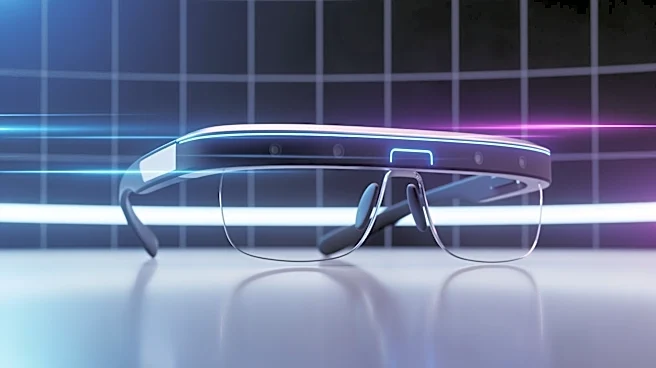
The augmented reality (AR) market is poised for significant changes in 2026 with the introduction of five new AR glasses that promise to reshape consumer experiences. Key developments include Snap's partnership
with Qualcomm to launch consumer AR glasses, Xreal's price reduction for its One Pro model, and Apple's testing of multiple smart-glass designs. These advancements highlight a focus on improving form factors, performance, and affordability. The collaboration between tech companies and AR vendors aims to enhance the functionality and accessibility of AR devices, making them more appealing to a broader audience.
Why It's Important?
The introduction of these AR glasses represents a pivotal moment for the wearable technology industry. By prioritizing form, performance, and price, these devices could significantly expand the consumer base for AR technology. The collaboration between major tech companies and AR vendors suggests a commitment to overcoming previous limitations of AR devices, such as bulkiness and high costs. This could lead to increased adoption of AR technology in everyday life, influencing sectors such as gaming, education, and remote work. The competitive landscape may drive further innovation, benefiting consumers with more choices and better products.
What's Next?
As these AR glasses enter the market, consumer feedback will play a crucial role in shaping future iterations. Companies may focus on refining user interfaces and expanding the range of applications for AR technology. The success of these devices could encourage further investment in AR research and development, potentially leading to breakthroughs in related fields such as virtual reality and mixed reality. The growing interest in AR technology may also prompt regulatory discussions around privacy and data security, as these devices become more integrated into daily life.