
What's Happening?
The ACT Expo 2026 highlighted significant advancements in hydrogen and electric vehicle (EV) technologies, focusing on zero-emission solutions for the transportation sector. Toyota Motor North America
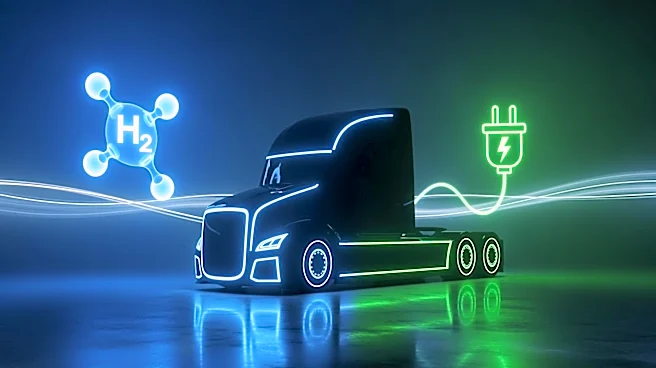
and Hyroad Energy announced a partnership to deploy 40 hydrogen fuel cell Class 8 trucks in Southern California. This initiative is part of a broader effort to integrate hydrogen fueling infrastructure and maintenance into a comprehensive commercial model, supporting Toyota's logistics operations. The trucks are designed to offer up to 500 miles of range with quick refueling times and produce only water vapor emissions. Additionally, Hino Trucks introduced the Le Series, a new battery-electric medium-duty vehicle, featuring a 269 kWh battery system and advanced safety features. New Eagle launched the OpenECU NX3, a single-controller platform aimed at simplifying electric vehicle architectures by integrating charging and supervisory control functions.
Why It's Important?
The developments showcased at ACT Expo 2026 underscore a significant shift towards sustainable transportation solutions, with hydrogen and electric vehicles playing a crucial role in reducing emissions. The deployment of hydrogen fuel cell trucks by Toyota and Hyroad represents a major step in decarbonizing freight transport, potentially setting a precedent for other logistics companies. The introduction of Hino's Le Series and New Eagle's OpenECU NX3 further highlights the industry's commitment to innovation in vehicle efficiency and safety. These advancements are critical as the U.S. seeks to meet environmental goals and reduce reliance on fossil fuels, offering economic opportunities in the clean energy sector and potentially influencing public policy towards more sustainable practices.
What's Next?
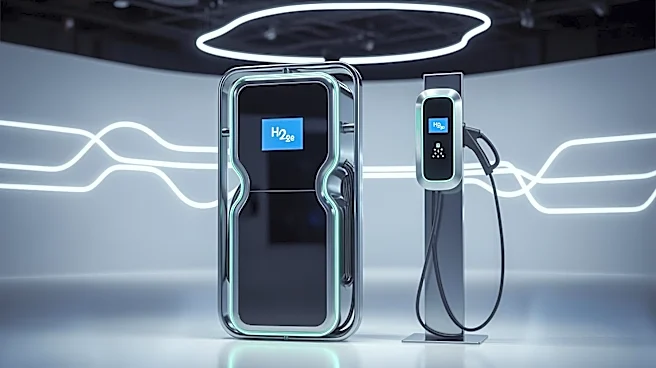
The initiatives presented at ACT Expo 2026 are expected to drive further collaboration among automotive manufacturers, technology developers, and policymakers to accelerate the adoption of zero-emission vehicles. As production of these new technologies begins, stakeholders will likely focus on expanding infrastructure, such as hydrogen fueling stations and EV charging networks, to support widespread deployment. The success of these projects could influence regulatory frameworks and incentivize additional investments in clean energy technologies, potentially leading to broader industry shifts towards sustainability.