
What's Happening?
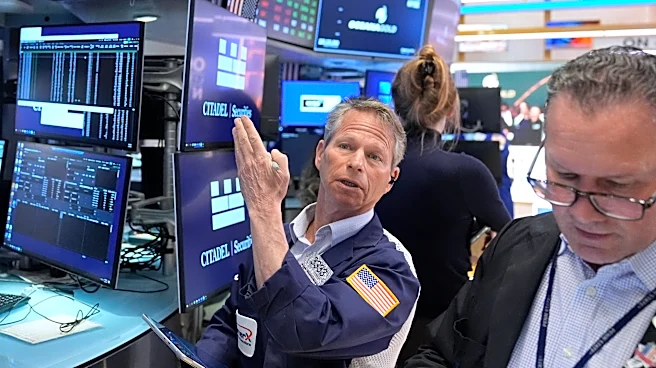
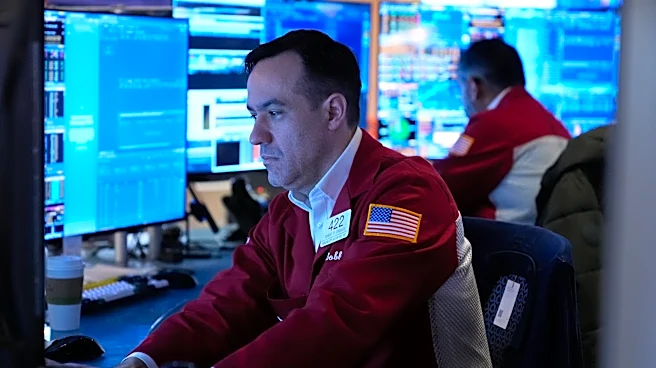
On Friday, U.S. stock indexes showed mixed results as the market remained volatile ahead of planned talks between the U.S. and Iran. The S&P 500 fell by 0.1%, the Dow Jones Industrial Average decreased
by 0.6%, while the Nasdaq composite saw a rise of 0.4%. The market's performance was influenced by a reported sharp increase in inflation for March, driven by the largest monthly jump in gas prices in six decades. Despite the inflation spike, the increase was not as severe as economists had anticipated. Treasury yields rose in response to the inflation data. The market's movements reflect investor caution as they await the outcome of the high-level talks scheduled for Saturday in Pakistan.
Why It's Important?
The mixed performance of U.S. stock indexes underscores the market's sensitivity to geopolitical developments and economic indicators. The upcoming U.S.-Iran talks are pivotal, as they could lead to a resolution of the conflict that has contributed to rising oil prices and inflation. The market's reaction to these talks highlights the broader economic implications of geopolitical tensions, particularly in terms of energy prices and inflationary pressures. Investors are closely monitoring these developments, as the outcome could influence global economic stability and impact monetary policy decisions. The Federal Reserve's approach to managing inflation will be critical, as it balances the need to support economic growth while addressing inflation concerns.
What's Next?
The outcome of the U.S.-Iran talks will be closely watched by investors and policymakers. A successful negotiation could lead to a reduction in geopolitical tensions, potentially stabilizing oil prices and easing inflationary pressures. However, the uncertainty surrounding the talks, particularly with Iran's conditions involving Israel, adds complexity to the situation. The Federal Reserve's response to the inflation data will also be crucial, as any changes in interest rates could further influence market dynamics. The market will continue to react to these developments, with potential implications for global trade, energy markets, and economic policy.