








What's Happening?
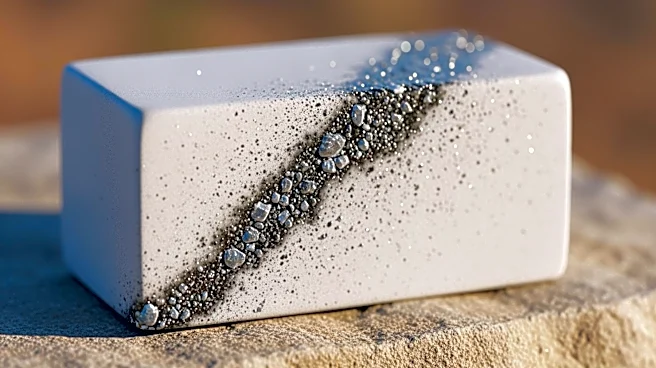
A study published in Scientific Reports reveals a new hybrid binder for concrete that significantly reduces its carbon footprint. The binder, made from fly ash, slag, coir biomass ash, and graphene nanoplatelets, cuts embodied carbon by nearly 45% while
enhancing strength and durability. This innovation addresses the high carbon emissions associated with traditional Portland cement, which is a major contributor to global CO2 emissions. The study highlights the potential of combining various materials to create a more effective low-carbon binder, offering a promising solution for sustainable construction.
Why It's Important?
The construction industry is a significant source of carbon emissions, primarily due to the energy-intensive production of cement. This new hybrid binder could revolutionize the industry by providing a more sustainable alternative, aligning with global efforts to reduce carbon footprints. The U.S. construction sector could benefit from adopting such technologies, potentially leading to more eco-friendly building practices and compliance with environmental regulations. This development also underscores the importance of innovation in addressing climate change and promoting sustainable development.