
What's Happening?
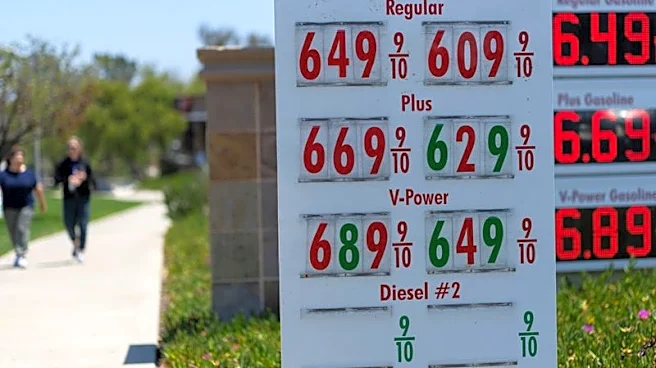
Oil prices have experienced a significant increase, with international benchmark Brent crude futures reaching $105.99 per barrel and U.S. West Texas Intermediate futures at $101.45 per barrel. This rise
is attributed to geopolitical tensions surrounding the Strait of Hormuz, a critical passage for global oil supplies. The International Energy Agency (IEA) has highlighted the potential for greater price volatility as peak summer demand approaches. The ongoing conflict in the Middle East has led to substantial supply cuts, with more than 14 million barrels per day (bpd) of supply lost, resulting in a total loss of over a billion barrels from Gulf producers. OPEC has also revised its demand growth estimates for 2026, reducing them to 1.2 million bpd from the previous 1.4 million bpd. The situation is further complicated by the recent exit of the United Arab Emirates from OPEC, effective May 1.
Why It's Important?
The surge in oil prices has significant implications for the global economy, particularly for countries heavily reliant on oil imports. The increased cost of oil can lead to higher transportation and production costs, which may be passed on to consumers in the form of higher prices for goods and services. This situation could exacerbate inflationary pressures in the U.S. and other economies. Additionally, the geopolitical tensions in the Middle East, particularly the closure of the Strait of Hormuz, pose a risk to global energy security. The potential for further conflict in the region could lead to additional disruptions in oil supply, further driving up prices. The situation underscores the importance of diplomatic efforts to ensure the free flow of energy through critical chokepoints like the Strait of Hormuz.
What's Next?
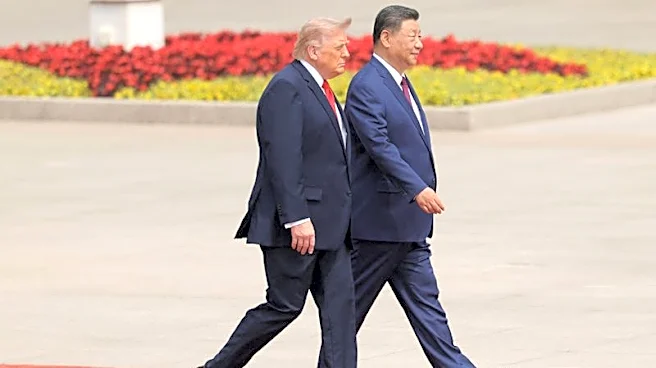
The ongoing discussions between President Trump and Chinese President Xi Jinping regarding the Strait of Hormuz are crucial. Both leaders have agreed on the importance of keeping the strait open to support the free flow of energy. However, the potential for further conflict in the Middle East remains a concern. The IEA and OPEC will continue to monitor the situation closely, with future updates likely to reflect the evolving geopolitical landscape. Traders and analysts will be watching for any signs of escalation in the region, as well as any changes in production levels from major oil-producing countries. The outcome of these developments will have a direct impact on global oil prices and economic stability.