
What's Happening?
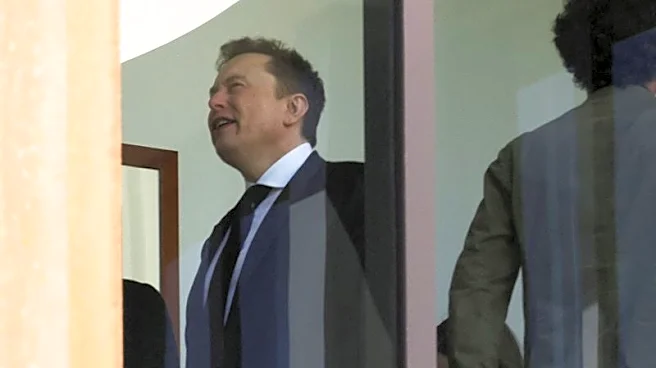
Elon Musk recently testified in a federal court in Oakland, California, in a lawsuit against OpenAI. Musk accuses OpenAI's CEO, Sam Altman, of deceiving him into donating $38 million to the nonprofit,
which he claims has since abandoned its mission to develop AI for the benefit of humanity. Musk is seeking billions in damages and demands Altman's resignation from the for-profit entity. The trial has attracted significant attention, with both Musk and Altman present in court. Musk's testimony included personal anecdotes and was marked by frequent interruptions during cross-examination. The presiding judge, Yvonne Gonzalez Rogers, maintained strict courtroom discipline, emphasizing punctuality and concise testimony.
Why It's Important?
This lawsuit highlights the ongoing debate over the ethical responsibilities of AI companies and the potential conflicts of interest when transitioning from nonprofit to for-profit models. The case could set a precedent for how tech companies balance innovation with ethical considerations. For Musk, the outcome could impact his reputation and influence in the tech industry, while for OpenAI, it could affect its operational strategy and leadership. The trial also underscores the broader societal concerns about AI's role and the accountability of its developers.
What's Next?
As the trial progresses, both parties are expected to present further evidence and testimonies. The outcome could influence future regulatory measures on AI development and corporate governance. Stakeholders in the tech industry, including investors and policymakers, will likely monitor the case closely for its implications on AI ethics and corporate responsibility.