


What's Happening?
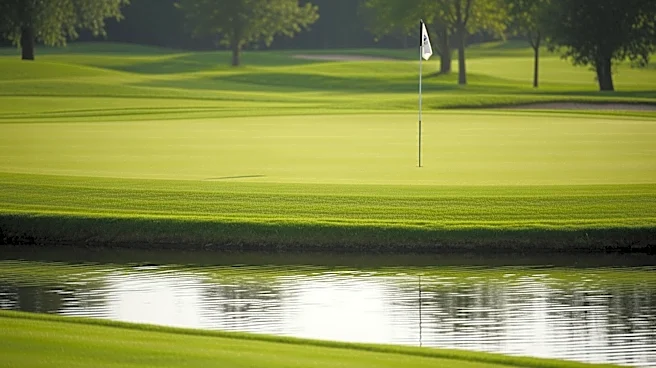
During the first round of the PGA Zurich Classic golf tournament in Avondale, Louisiana, golfer Michael Brennan encountered significant challenges due to water hazards on the course. As he attempted to hit his ball out of floating debris on the 18th hole,
the ball landed back in the water, highlighting the difficulties players faced with the course's conditions. The tournament, which is part of the PGA Tour, attracts professional golfers from around the world and is known for its unique team format. The event is held annually at the TPC Louisiana, a course designed by renowned architect Pete Dye, which features numerous water hazards and strategically placed bunkers.
Why It's Important?
The challenges faced by golfers at the PGA Zurich Classic underscore the impact of course conditions on professional tournaments. Water hazards and other environmental factors can significantly influence the outcome of a golf event, affecting player performance and tournament results. For the PGA Tour, maintaining competitive and fair playing conditions is crucial for the integrity of the sport and the satisfaction of both players and spectators. The Zurich Classic, with its team format, also highlights the importance of strategy and teamwork in overcoming such challenges. The tournament's outcome can have implications for player rankings and future sponsorship opportunities.
What's Next?
As the tournament progresses, players and their teams will need to adapt their strategies to navigate the challenging course conditions. The PGA Tour may also consider adjustments to the course setup to ensure fair play. Spectators and fans will be watching closely to see how the teams perform under these conditions, and the results could influence future course designs and tournament preparations. Additionally, the performance of players in this tournament could impact their standings in the FedEx Cup rankings, which determine eligibility for the season-ending playoffs.