


What's Happening?
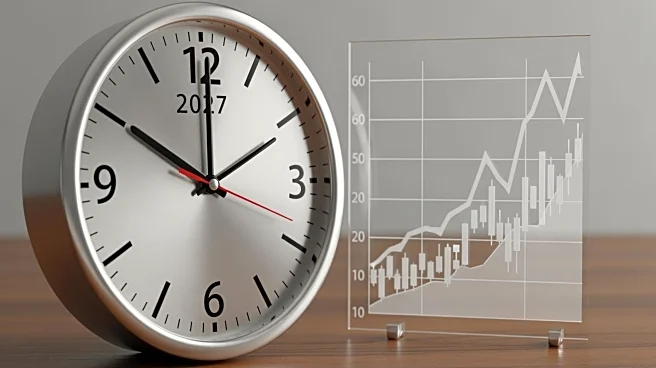
J.P. Morgan has forecasted that the U.S. Federal Reserve's next move will be a rate hike in 2027, while Barclays and Goldman Sachs have postponed their rate cut predictions to mid-2026. This comes as recent data indicates that the U.S. labor market is not rapidly deteriorating, with a decline in the unemployment rate to 4.4% and solid wage growth. These factors have led to expectations that the Federal Reserve will maintain current borrowing costs at its January meeting. The CME FedWatch tool shows a 95% probability of rates remaining unchanged. Meanwhile, Goldman Sachs and Barclays have adjusted their rate cut forecasts to September and December 2026, respectively.
Why It's Important?
The predictions by major financial institutions regarding Federal Reserve rate
changes are crucial for economic stakeholders, as they influence investment strategies and economic planning. A potential rate hike in 2027 suggests confidence in the U.S. economy's resilience and the labor market's stability. However, the delay in rate cuts by Barclays and Goldman Sachs indicates caution due to mixed economic signals. These developments are significant for businesses and consumers, as interest rates impact borrowing costs, investment returns, and overall economic growth. The ongoing debate over the Federal Reserve's independence, highlighted by tensions between President Trump and Fed Chair Jerome Powell, adds another layer of complexity to the economic outlook.
Beyond the Headlines
The tension between President Trump and Fed Chair Jerome Powell over interest rate policies underscores the broader issue of central bank independence. Powell's recent comments about threats of criminal indictment from the Trump administration highlight the political pressures facing the Federal Reserve. This situation raises concerns about the potential for political influence over monetary policy, which could have long-term implications for economic stability and investor confidence. The independence of the Federal Reserve is a cornerstone of U.S. economic policy, and any perceived threats to this independence could lead to increased market volatility and uncertainty.