







What's Happening?
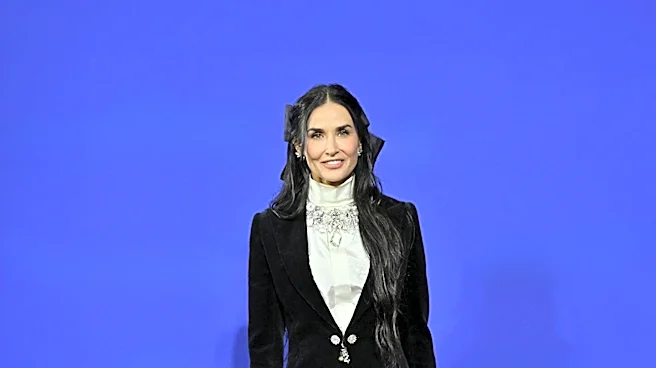
Demi Moore, speaking at the Cannes Film Festival, emphasized the need for Hollywood to embrace artificial intelligence (AI) rather than resist it. Moore, a member of the festival's jury, argued that opposing AI is a losing battle and suggested that the industry
should find ways to work with the technology. Her comments come amid growing concerns about AI's impact on job security across various sectors, including entertainment. The introduction of AI actors, such as Tilly Norwood, has already caused significant debate within the industry. Despite these concerns, Moore believes that AI cannot replace the essence of true art, which she describes as originating from the human soul and spirit. Her stance aligns with other industry figures like Ben Affleck, who launched an AI film tech company to explore AI's potential in filmmaking.
Why It's Important?
The integration of AI in Hollywood is a contentious issue, with potential implications for job security and creative processes. As AI technology advances, it could transform how films and TV shows are produced, potentially reducing the need for human actors and crew. This shift could lead to significant job losses, particularly in entry-level positions. However, proponents like Moore and Affleck argue that AI can enhance creative decision-making and expand artistic possibilities. The Screen Actors Guild-American Federation of Television and Radio Artists (SAG-AFTRA) has already negotiated stronger AI guidelines to protect human performances, indicating the industry's cautious approach to AI adoption. The outcome of this debate could shape the future of entertainment, influencing how stories are told and who gets to tell them.
What's Next?
As AI continues to evolve, Hollywood will likely face ongoing discussions about its role in the industry. Stakeholders, including filmmakers, actors, and unions, will need to navigate the balance between technological innovation and job preservation. The expansion of AI actors and tools could lead to new opportunities for storytelling, but also necessitate updated regulations and ethical considerations. The industry's response to AI will be closely watched by other sectors facing similar technological disruptions. Future developments may include further integration of AI in production processes, as well as continued advocacy for human-centric creative roles.