


What's Happening?
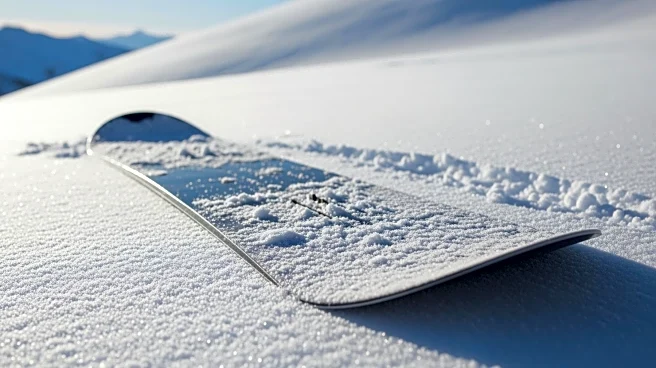
As the 2026 Winter Olympics in Milan Cortina approach, the snowboarding community is highlighting the skill of 'riding switch' as a critical and underappreciated aspect of the sport. This technique involves snowboarders riding backward and spinning in multiple directions, a skill that is considered one of the sport's holy grails. Notable snowboarders like Shaun White and Chloe Kim have emphasized the importance of mastering this skill, which is often compared to a right-handed person trying to write with their left hand. The ability to ride switch is expected to play a significant role in determining medal winners at the upcoming games, as it allows athletes to perform complex tricks and spins that are essential for high scores.
Why It's Important?
The emphasis
on 'riding switch' underscores a shift in competitive snowboarding, where technical skills are becoming as crucial as the more visually impressive jumps and flips. This development could influence training regimens and competition strategies, as athletes who excel in this area may have a competitive edge. For Team USA and other national teams, mastering this skill could be pivotal in securing medals, thereby enhancing their standing in the international snowboarding community. The focus on technical proficiency also highlights the evolving nature of snowboarding, where innovation and skill diversification are increasingly valued.
What's Next?
As the Olympics draw nearer, snowboarders are likely to intensify their focus on perfecting 'riding switch' and other technical skills. This could lead to more innovative performances and potentially new records in the sport. Coaches and athletes will need to balance the demands of technical training with the need to maintain the physical conditioning required for the high-impact nature of snowboarding. The upcoming competitions will serve as a platform to showcase these skills, potentially setting new standards for future events.
Beyond the Headlines
The growing recognition of 'riding switch' may influence the broader snowboarding culture, encouraging recreational snowboarders to explore and develop this skill. It also reflects a broader trend in sports where technical mastery is increasingly celebrated alongside physical prowess. This shift could inspire a new generation of snowboarders to pursue the sport, contributing to its growth and evolution.