



What's Happening?
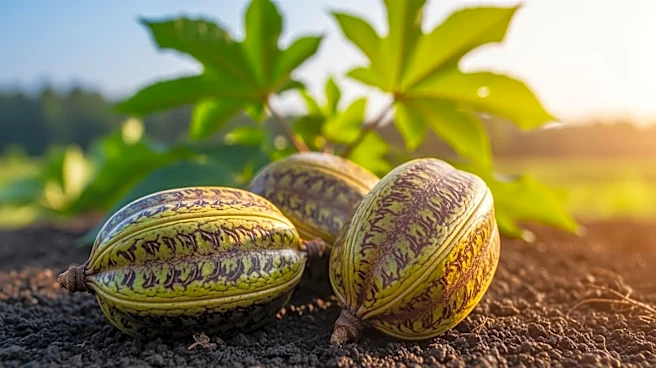
Casterra Ag Ltd., a subsidiary of Evogene Ltd., has announced the successful completion of commercial field trials in Brazil, positioning castor oil as a promising candidate for economically viable biofuel production. The trials were conducted across
74 hectares in the State of Bahia, with 64 hectares under rainfed conditions and 10 hectares using center pivot irrigation. The trials aimed to evaluate plant populations and nutrient application rates, collecting comprehensive data on farming costs. Casterra's advanced seed varieties, designed for mechanization and low-input cultivation, demonstrated economic viability for large-scale castor farming. The company plans to expand operations in Brazil by establishing a local subsidiary and forming strategic partnerships with leading castor oil producers.
Why It's Important?
The success of Casterra's field trials in Brazil marks a significant step in the development of sustainable biofuel feedstocks. Castor oil, recognized for its high value in bio-based industries, could become a key player in reducing reliance on fossil fuels. The ability to produce castor oil economically at scale could drive growth in the biofuel sector, offering a renewable alternative to traditional energy sources. This development is crucial for the U.S. and global markets seeking sustainable energy solutions. The expansion of castor farming could also benefit agricultural economies by providing new opportunities for farmers and reducing environmental impact through sustainable practices.
What's Next?
Casterra plans to focus on commercial penetration in Brazil by establishing a local subsidiary and forming strategic partnerships with castor oil producers. The company aims to expand castor farming trials across various agricultural and climatic zones in Brazil. These efforts will support the scalability of castor oil production, potentially influencing global biofuel markets. Stakeholders in the biofuel industry may respond by investing in castor oil as a viable feedstock, while policymakers could consider supporting initiatives that promote sustainable energy sources.
Beyond the Headlines
The successful trials highlight the potential for castor oil to contribute to the biofuel industry's sustainability goals. As the demand for renewable energy sources grows, castor oil's scalability and economic viability could lead to broader adoption in bio-based industries. This shift may encourage further research and development in alternative feedstocks, driving innovation in sustainable energy solutions. Additionally, the expansion of castor farming could have positive socio-economic impacts, providing new income streams for farmers and promoting environmentally friendly agricultural practices.