



What's Happening?
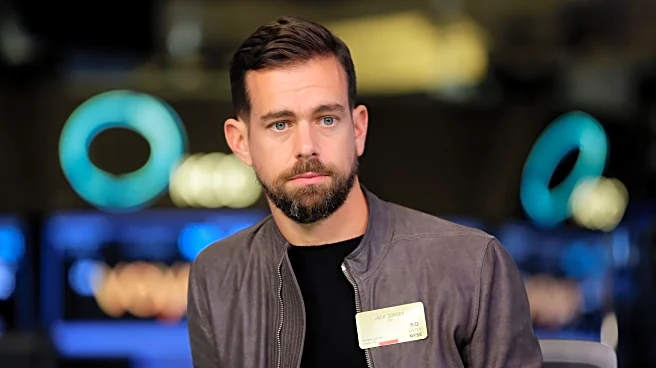
Block, a financial services company led by Jack Dorsey, has announced a significant reduction in its workforce, laying off over 4,000 employees, which constitutes nearly 40% of its total staff. This decision is part of a broader strategy to integrate
artificial intelligence (AI) into its operations, aiming to enhance productivity and profitability. The layoffs are seen as a reflection of a growing trend among tech companies to leverage AI advancements, which are expected to streamline operations and reduce costs. The announcement led to an 18% increase in Block's stock value, as investors responded positively to the anticipated efficiency gains. The move aligns with predictions from the Citrini report, which highlighted potential economic shifts due to AI, including increased unemployment in certain sectors.
Why It's Important?
The layoffs at Block underscore a critical tension in the current economic landscape, where technological advancements are reshaping traditional employment structures. While the integration of AI promises increased efficiency and profitability for companies, it also raises concerns about job security and economic inequality. The Citrini report, which foresaw a potential 'white-collar recession' driven by AI, suggests that while some sectors may experience wealth growth, others could face significant job losses. This development highlights the broader implications of AI on the labor market, where the benefits of technological progress may not be evenly distributed, potentially exacerbating economic disparities.
What's Next?
As Block moves forward with its AI-driven strategy, the company and its stakeholders will need to navigate the challenges of workforce reduction and the integration of new technologies. The broader tech industry may observe Block's approach as a case study in balancing innovation with social responsibility. Policymakers and economic analysts will likely monitor the situation closely, considering potential regulatory responses to mitigate the negative impacts of AI on employment. The ongoing dialogue around AI's role in the economy will continue to evolve, with stakeholders from various sectors contributing to the conversation on sustainable and equitable technological integration.