






What's Happening?
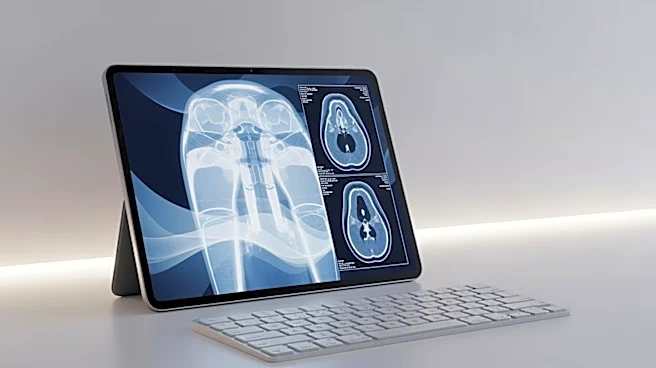
Visage Imaging, a subsidiary of Pro Medicus Ltd., has announced the release of its AI-optimized Visage 7 | Reporting platform at the Society for Imaging Informatics in Medicine (SIIM) 2026 annual meeting. The platform is designed to enhance radiology
reporting efficiency by integrating advanced AI tools directly into the diagnostic workflow. Visage 7 | Reporting allows radiologists to incorporate AI inference results, measurements, and annotations into reports, streamlining the process and improving accuracy. The platform supports a wide range of diagnostic imaging modalities and is built on an open architecture to ensure future interoperability with emerging AI models. This development aims to eliminate the need for legacy third-party systems, thereby reducing cognitive burden and increasing diagnostic precision.
Why It's Important?
The introduction of Visage 7 | Reporting is significant for the healthcare industry, particularly in radiology, as it promises to improve diagnostic accuracy and efficiency. By integrating AI tools into the reporting process, radiologists can deliver faster and more precise interpretations, which is crucial for patient care. The platform's open architecture allows for adaptability to future AI advancements, ensuring that healthcare providers can continuously leverage cutting-edge technology. This could lead to cost savings and improved patient outcomes, as well as positioning Visage Imaging as a leader in the enterprise imaging market. The move reflects a broader trend in healthcare towards AI integration, which is expected to transform medical diagnostics and treatment planning.
What's Next?
Visage Imaging plans to roll out the Visage 7 | Reporting platform in North America by late 2026. As the platform gains traction, it is likely to influence other companies in the imaging sector to adopt similar AI-driven solutions. Healthcare providers may need to invest in training and infrastructure to fully utilize the platform's capabilities. Additionally, regulatory bodies might develop new guidelines to ensure the safe and effective use of AI in medical diagnostics. The success of this platform could also spur further innovation in AI applications across other medical fields, potentially leading to a more integrated and efficient healthcare system.