



What's Happening?
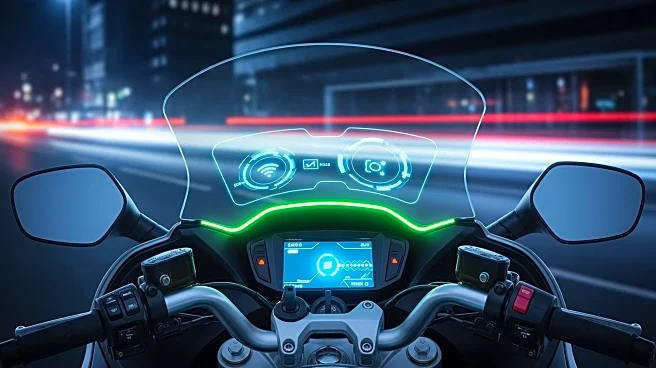
Harman has unveiled a new connectivity platform called Ready Ride, specifically designed for the two-wheeler market. Announced at MWC Barcelona 2026, the platform features over-the-air (OTA) updates and supports Apple CarPlay and Android Auto. It is powered
by Qualcomm Technologies’ Snapdragon Digital Chassis system-on-chip for two-wheelers. Ready Ride includes a scalable telematics control unit, software stack, cellular connectivity, and an OEM backend. The platform aims to reduce time-to-market for original equipment manufacturers (OEMs) and lower the total cost of ownership for riders by using a standardized hardware and software approach. The unit is IP69-certified to prevent dust and water ingress and is validated for shock and vibration performance under motorcycle conditions. Future developments for the platform include theft alerts, stolen vehicle tracking, and remote immobilization capabilities.
Why It's Important?
The introduction of Ready Ride marks a significant advancement in motorcycle connectivity, a sector where less than 5% of vehicles are currently connected via telematics, according to Berg Insight. By providing a standardized platform, Harman aims to simplify the integration process for OEMs, potentially accelerating the adoption of connected technologies in the motorcycle industry. This could lead to enhanced safety features, improved navigation, and a more integrated user experience for riders. As a subsidiary of Samsung Electronics, Harman's move into the two-wheeler market could also influence other tech companies to explore similar innovations, potentially reshaping the landscape of motorcycle technology.
What's Next?
Harman plans to continue developing the Ready Ride platform, with future enhancements including theft alerts, stolen vehicle tracking, and remote immobilization. These features could further increase the appeal of connected motorcycles, offering additional security and convenience to riders. OEMs may begin integrating Ready Ride into their new models, potentially leading to a broader market shift towards connected two-wheelers. As the platform gains traction, it could also prompt regulatory bodies to consider new standards and guidelines for connected motorcycle technologies.