
What's Happening?
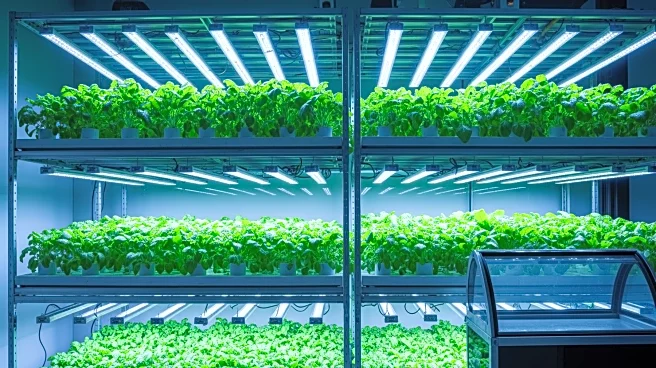
Michigan State University researchers are working to enhance the financial viability of controlled environment agriculture (CEA), which includes greenhouses and vertical farms. Megan Burritt, a horticulture
economics doctoral student, is developing tools to help growers assess the economic feasibility of investing in CEA systems. Despite higher upfront and variable costs, CEA offers opportunities for revenue generation during off-season months. Burritt's research highlights consumer interest in premium crops grown indoors, suggesting a potential expansion beyond traditional lettuces to include high-value crops like strawberries.
Why It's Important?
The research at MSU is crucial as it addresses the economic challenges faced by traditional growers considering a shift to controlled environment agriculture. By providing tools to evaluate financial viability, the research supports the adoption of CEA, which can lead to increased food production efficiency and sustainability. This shift is particularly relevant in the context of climate change and resource scarcity, as CEA systems use less water and land compared to traditional farming. The potential expansion of premium crop availability could also meet growing consumer demand for fresh, locally grown produce.
What's Next?
As the research progresses, it is expected to provide more comprehensive financial models for growers, potentially leading to increased adoption of CEA systems. This could result in a more resilient agricultural sector capable of producing food year-round, regardless of external climate conditions. The findings may also influence policy decisions and investment strategies in the agricultural industry, promoting sustainable practices and innovation.