





What's Happening?
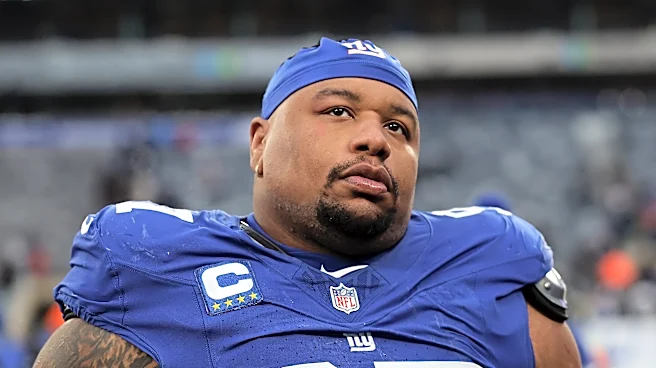
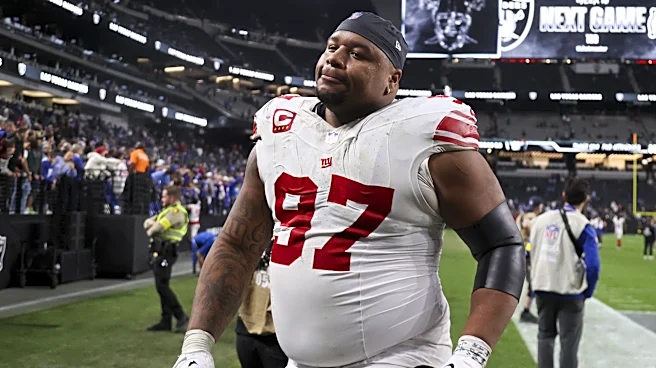
Dexter Lawrence, a defensive tackle for the New York Giants, has requested a trade due to dissatisfaction with his current contract. Lawrence, who signed his contract three years ago, is set to earn $20 million in 2026 and $19.5 million in 2027. However,
he believes his compensation does not reflect his value in the current market, where top interior defensive linemen earn up to $31.75 million annually. Lawrence's request for a trade comes after the Giants' reluctance to offer a contract adjustment that meets his expectations. The recent contract of Eagles' defensive tackle Jordan Davis, with a new-money average per year (APY) of $26 million, has further highlighted the disparity in Lawrence's earnings. Despite the trade request, Lawrence remains a key player, known for drawing double teams and creating disruptions on the field.
Why It's Important?
The trade request by Dexter Lawrence underscores the evolving dynamics of player contracts in the NFL, particularly for high-performing positions like defensive tackle. As the salary cap increases, players are seeking compensation that aligns with market trends and their contributions to the team. Lawrence's situation highlights the financial pressures teams face in retaining top talent while managing salary cap constraints. For the Giants, losing Lawrence could impact their defensive capabilities, given his role as a disruptive force on the field. The situation also serves as a signal to other teams about the potential availability of a top-tier defensive player, which could lead to competitive offers and negotiations.
What's Next?
If the Giants do not adjust Lawrence's contract, they may receive trade offers from other teams interested in acquiring his talents. The Giants' General Manager, Joe Schoen, could face increased pressure to either negotiate a new deal with Lawrence or consider trade proposals. The outcome of this situation could influence future contract negotiations for other players in similar positions, as teams and players navigate the balance between performance, market value, and salary cap limitations.