






What's Happening?
In 2026, several major tech companies are making significant strides in augmented reality (AR) technology, with new product launches and substantial investments. Anduril, a defense technology company, has raised $5 billion in a Series H funding round,
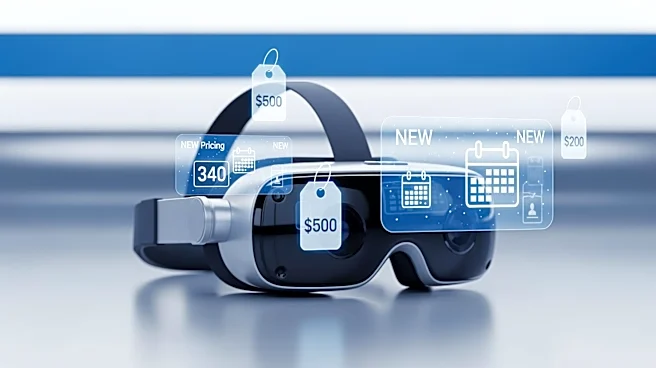
boosting its valuation to $61 billion. This funding is expected to support the development of AR systems for military use, such as augmented-reality helmets for troops. Meanwhile, Meta has introduced new Ray-Ban smart glasses, priced at $499, which include prescription options, marking a shift from niche to mainstream consumer availability. Apple is reportedly testing four different smart-glass designs, indicating a potential premium market entry in 2027. Samsung's leaked images of its 'Jinju' glasses have sparked consumer debates over the design of AR wearables. Additionally, Google and Warby Parker are collaborating on AI-powered smart glasses aimed at enhancing retail experiences. However, the proliferation of smart glasses has also raised privacy concerns, leading to public debates and calls for regulatory measures.
Why It's Important?
These developments in AR technology are significant as they represent a shift towards mainstream adoption and integration into everyday life. The substantial investment by Anduril highlights the growing interest in AR applications within the defense sector, potentially influencing military procurement and geopolitical strategies. Meta's affordable pricing for its Ray-Ban smart glasses could set a new consumer standard, making AR technology more accessible to the general public. Apple's potential entry into the premium AR market could drive innovation and competition, leading to improved user experiences. The collaboration between Google and Warby Parker suggests a future where AR technology enhances retail and shopping experiences, potentially transforming consumer behavior. However, the privacy concerns associated with smart glasses could lead to regulatory challenges and impact how these devices are used in public spaces.
What's Next?
As AR technology continues to evolve, companies are likely to accelerate product development and launch cycles to capture market share. The competition among tech giants could lead to rapid advancements in AR capabilities and user experience. Regulatory bodies may need to address privacy concerns, potentially introducing new rules governing the use of AR devices in public spaces. Consumer acceptance and adoption will play a crucial role in determining the success of these technologies. The ongoing debates and potential regulations could shape the future landscape of AR technology, influencing how it is integrated into daily life and various industries.
Beyond the Headlines
The integration of AR technology into consumer products and military applications raises ethical and cultural questions. The use of AR in military contexts could alter the nature of warfare and defense strategies, while consumer adoption may lead to changes in social interactions and privacy norms. The potential for AR to blur the lines between digital and physical realities could have long-term implications for how individuals perceive and interact with the world. As AR technology becomes more prevalent, society will need to navigate the balance between innovation and privacy, ensuring that advancements benefit the public while safeguarding individual rights.