




What's Happening?
A team led by Rice University professor Caroline Ajo-Franklin has developed a new bioelectrical sensor system called the electroactive co-culture sensing system (e-COSENS). This innovative technology uses synthetic microbial co-cultures to detect various
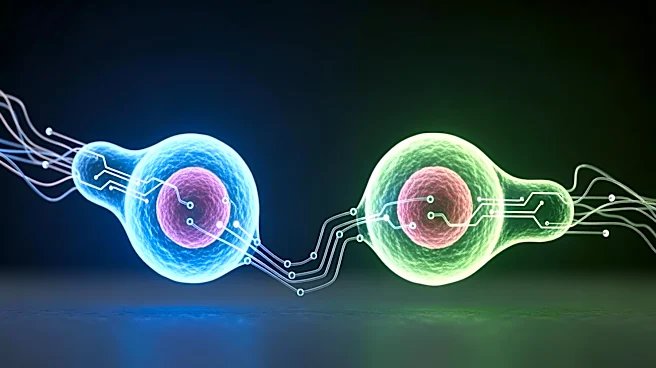
analytes, offering potential applications in health monitoring and environmental tracking. The system employs a co-culture approach, distributing sensing and electrical signal production across two bacterial species, Escherichia coli and Lactobacillus plantarum. This method allows for modular and flexible sensor construction, enabling the detection of diverse targets by rewiring the E. coli's sensing circuitry.
Why It's Important?
The development of e-COSENS represents a significant advancement in bioelectronics, providing a more adaptable and sensitive approach to biosensing. This technology could revolutionize environmental monitoring and health diagnostics by offering real-time, in situ detection capabilities. The modular design allows for easy adaptation to different analytes, making it a versatile tool for various applications. The potential for low-cost, portable bioelectronic sensors could lead to widespread use in field settings, enhancing the ability to monitor and respond to environmental and health-related challenges.