

What's Happening?
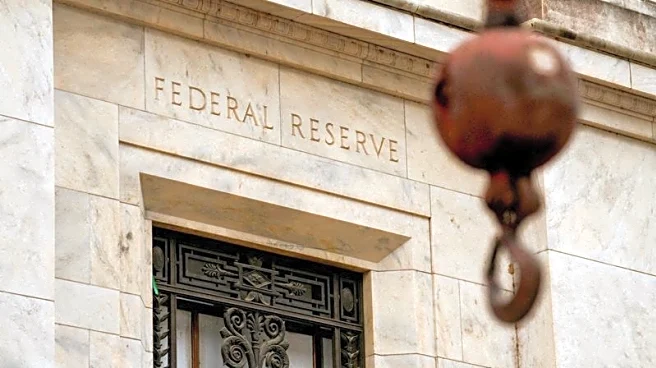
The Federal Reserve is expected to maintain its current interest rates, despite President Trump's calls for cuts, as the ongoing conflict with Iran introduces significant economic uncertainty. The central bank had previously reduced rates three times
last year but paused in January, adopting a cautious approach to monitor inflation trends. The war in Iran poses a dual challenge for the Fed: rising oil prices could exacerbate inflation, while the broader economic instability might slow growth and increase unemployment. This situation places the Fed's dual mandate of ensuring low inflation and high employment in potential conflict. Fed Chair Jerome H. Powell is anticipated to provide insights into the central bank's future plans during a post-meeting briefing. The Fed is also expected to update its projections for interest rates and economic growth, which are closely monitored by financial markets.
Why It's Important?
The Federal Reserve's decision to hold interest rates steady is significant as it reflects the central bank's cautious stance amid geopolitical tensions and economic uncertainty. Rising energy costs due to the Iran conflict could lead to increased inflationary pressures, complicating the Fed's efforts to stabilize prices. This decision also impacts the Trump administration, which has prioritized addressing high prices and affordability. The Fed's reluctance to cut rates provides a focal point for political criticism, even as economic experts suggest that maintaining current rates is prudent. The outcome of this decision will influence financial markets, consumer confidence, and the broader U.S. economy, as stakeholders assess the potential impacts on inflation and employment.
What's Next?
Looking ahead, the Federal Reserve will continue to monitor the economic impacts of the Iran conflict, particularly the effects on energy prices and inflation expectations. Analysts predict that the Fed may consider additional rate cuts later in the year if economic conditions warrant such action. The central bank's future decisions will be closely watched by Wall Street and policymakers, as they navigate the complex interplay of geopolitical tensions and domestic economic goals. Additionally, the ongoing Justice Department investigation into Fed Chair Powell adds another layer of uncertainty, potentially influencing the Fed's leadership and decision-making processes.