





What's Happening?
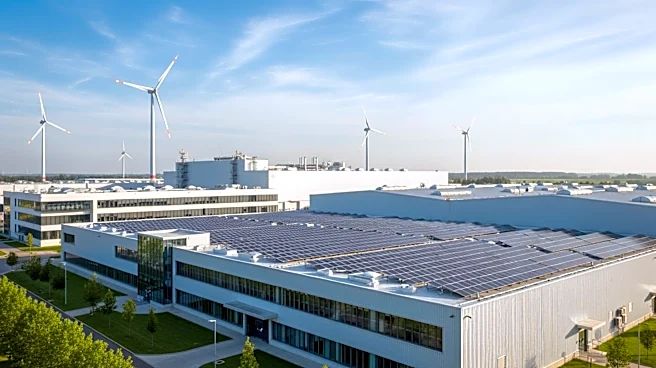
Stellantis, a global automaker, is significantly advancing its renewable energy initiatives across its European manufacturing network. The company is focusing on increasing the use of decarbonized energy sources, with photovoltaic installations being
scaled across 27 manufacturing sites, representing over 500 MW of installed capacity. By 2026, Stellantis aims for on-site self-consumption to account for 31% of the energy used by its European plants, with some sites targeting as much as 80%. Additionally, Battery Energy Storage Systems (BESS) are planned for 20 sites, with seven expected to be operational by 2026. These efforts are part of Stellantis' broader strategy to reduce CO2 emissions and enhance industrial competitiveness by diversifying its energy mix and increasing energy resilience.
Why It's Important?
Stellantis' expansion of renewable energy solutions is a critical step towards achieving its long-term carbon net-zero goals. By increasing the share of low-carbon energy sources and implementing energy storage solutions, the company is not only reducing its carbon footprint but also enhancing its energy autonomy and industrial competitiveness. This move is significant for the automotive industry, which is under increasing pressure to adopt sustainable practices. The initiative also reflects a growing trend among global manufacturers to invest in renewable energy as a means to mitigate exposure to energy market volatility and support grid stability. The success of Stellantis' strategy could serve as a model for other companies aiming to transition to more sustainable operations.
What's Next?
Stellantis plans to continue expanding its renewable energy projects, with a focus on increasing the use of geothermal and biomass-based energy solutions. The company is also working on scaling its Battery Energy Storage Systems across its European sites to optimize energy use and support grid balance. As these initiatives progress, Stellantis will likely continue to collaborate with local energy providers and system operators to enhance its energy management capabilities. The company's commitment to sustainable manufacturing is expected to drive further innovations in energy efficiency and decarbonization, potentially influencing industry standards and regulatory policies in the future.