





What's Happening?
SpaceX has received approval from the Federal Aviation Administration (FAA) to conduct test flights of its new Starfall reentry vehicles, which are designed for in-space manufacturing and rapid cargo delivery. The FAA's environmental assessment and subsequent
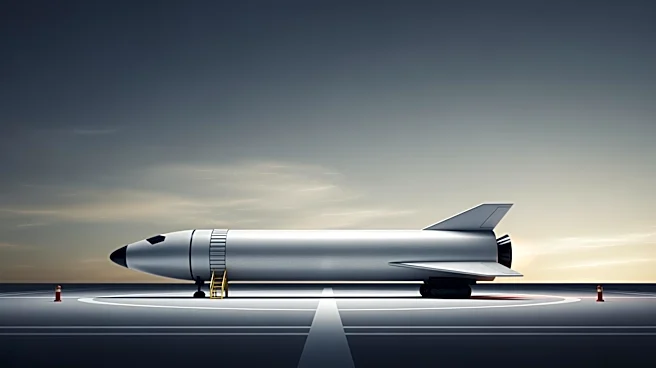
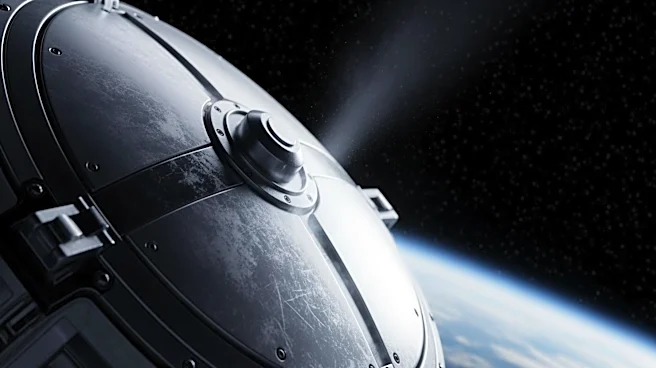
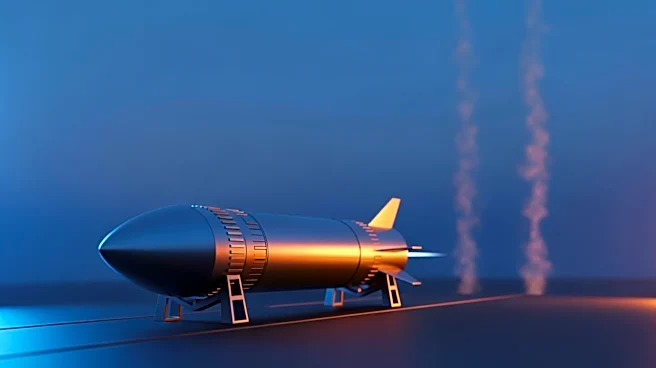
approval allow for two test reentries of the Starfall capsules in the Pacific Ocean. These capsules, which can be launched aboard either a Falcon 9 or Starship rocket, are intended to support a self-sustaining manufacturing economy in space by providing access to microgravity and vacuum environments. The capsules are equipped with cold-gas thrusters and parachutes for controlled reentry and recovery. SpaceX envisions Starfall as a potential successor to the International Space Station, offering scalable services for in-space manufacturing and cargo delivery.
Why It's Important?
The development of the Starfall capsules represents a significant step forward in the commercialization of space. By enabling in-space manufacturing, SpaceX could revolutionize industries that benefit from microgravity environments, such as pharmaceuticals and advanced materials. The ability to return manufactured goods to Earth efficiently could open new markets and reduce costs associated with space-based production. Additionally, the project aligns with SpaceX's broader goals of enhancing space logistics and infrastructure, potentially positioning the company as a leader in the emerging space economy. This development could also stimulate competition and innovation among other space companies, driving further advancements in space technology.
What's Next?
While the FAA has approved the test flights, SpaceX has not yet announced specific launch dates for the Starfall missions. The success of these tests will be crucial in determining the feasibility of the Starfall project and its potential to support a commercial in-space manufacturing market. If successful, SpaceX may proceed with scaling up the production and deployment of Starfall capsules, potentially collaborating with various industries to explore new applications. The project could also influence regulatory frameworks and international cooperation in space activities, as the demand for space-based services grows.