






What's Happening?
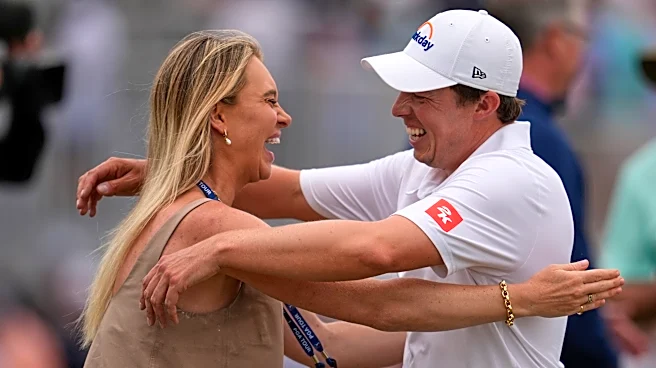
Matt Fitzpatrick, a prominent golfer, recently won the RBC Heritage tournament at Harbour Town Golf Links, marking his fourth PGA Tour victory. However, his win was overshadowed by criticism regarding his slow play during the final round. Fitzpatrick took
an extended four minutes to hit a layup shot on a par-five, which drew significant criticism from spectators and commentators. This incident has reignited discussions about the need for stricter pace of play regulations on the PGA Tour. Currently, the Tour has guidelines, but enforcement is lax as long as groups maintain pace with each other. The incident has led to calls for the introduction of player-specific shot clocks, which would penalize players for exceeding a set time limit per shot.
Why It's Important?
The slow play issue in professional golf has been a longstanding concern, affecting the viewing experience and the sport's overall pace. Fitzpatrick's incident highlights the need for the PGA Tour to address this issue more effectively. Implementing shot clocks could significantly enhance the pace of play, making the sport more engaging for audiences and fairer for players. This change could also set a precedent for other golf tournaments worldwide, potentially leading to a more dynamic and viewer-friendly sport. The introduction of shot clocks would require players to adapt their strategies and could impact the competitive landscape of professional golf.
What's Next?
The PGA Tour is under increasing pressure to take decisive action following Fitzpatrick's slow play incident. If the Tour decides to implement shot clocks, it would need to establish clear rules and penalties for violations. This change could face resistance from players who are accustomed to the current pace of play. However, the potential benefits in terms of improved viewer experience and fair competition may outweigh the challenges. Stakeholders, including players, sponsors, and broadcasters, will likely engage in discussions to find a balanced solution that addresses the slow play issue while maintaining the integrity of the sport.