




What's Happening?
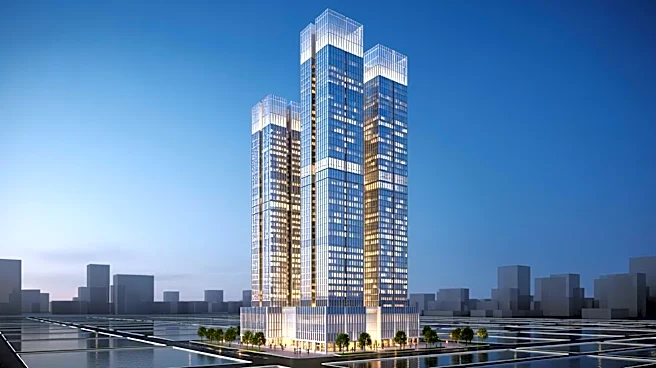
American Express, a financial services giant with a history dating back to 1850, has announced plans to build a new global headquarters at 2 World Trade Center in Lower Manhattan. This move is part of a broader effort to revitalize the World Trade Center area,
nearly 25 years after the 9/11 attacks. The new headquarters will be a state-of-the-art facility, designed to accommodate up to 10,000 workers, and will feature energy-efficient technologies and over an acre of outdoor space with gardens and terraces. This development underscores American Express's long-standing commitment to New York City, where it has been a significant economic player. The company, which started as an express delivery service, has evolved into a global payments and lifestyle brand, adapting to various cultural and economic shifts over its 176-year history.
Why It's Important?
The decision by American Express to establish its headquarters at the World Trade Center is significant for several reasons. Economically, it represents a substantial investment in New York City, potentially boosting local employment and contributing to the area's economic recovery post-9/11. Culturally, it reinforces American Express's role as an iconic American brand that has shaped consumer behavior and financial services. The company's history of innovation and adaptation reflects broader trends in American business, from the rise of credit cards to the emphasis on premium lifestyle branding. This move also highlights the resilience and ongoing transformation of Lower Manhattan as a business hub, symbolizing both recovery and growth.
What's Next?
The construction of the new headquarters is expected to be completed by 2031, marking the final commercial piece of the World Trade Center complex. As the project progresses, it will likely attract attention from other businesses and investors, potentially spurring further development in the area. Stakeholders, including local government and business leaders, may view this as an opportunity to enhance the economic vitality of Lower Manhattan. Additionally, American Express's commitment to sustainability and innovation in its new headquarters could set a precedent for future corporate developments in urban centers.
Beyond the Headlines
American Express's decision to return to the World Trade Center site carries symbolic weight, reflecting themes of resilience and renewal. The company's history of supporting cultural and historical landmarks, such as the Statue of Liberty and Ellis Island, aligns with its current efforts to contribute to the revitalization of a site deeply embedded in American history. This move may also influence corporate strategies regarding headquarters locations, emphasizing the importance of cultural and historical connections in business decisions.