


What's Happening?
Consumer confidence in the United States has experienced a significant decline, as reported by the University of Michigan's Surveys of Consumers. The survey indicates a 6 percent drop in consumer sentiment for March, returning to levels last observed
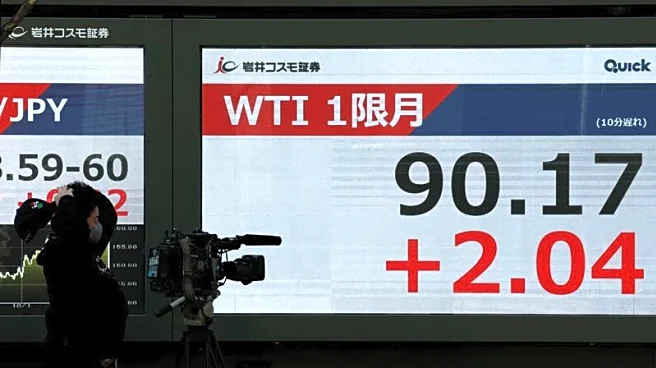
in December. This decline is attributed to rising gas prices and volatile financial markets, exacerbated by geopolitical tensions following the U.S. and Israel's attack on Iran. The conflict has disrupted global oil flow, contributing to increased inflation expectations among consumers. The survey reveals that consumers anticipate inflation to rise to 3.8 percent for the year ahead, marking the largest increase in nearly a year. Despite these challenges, the National Retail Federation forecasts a 4.4 percent rise in U.S. retail sales for the year, although confidence is not expected to improve significantly.
Why It's Important?
The drop in consumer confidence is a critical indicator of economic health, reflecting public sentiment about personal finances and the broader economy. Rising gas prices and inflation expectations can lead to reduced consumer spending, impacting businesses and economic growth. The situation is further complicated by geopolitical tensions, which add uncertainty to financial markets and consumer behavior. Retailers and brands, such as Lululemon, are closely monitoring these trends as they strategize to maintain sales and market stability. The broader economic implications include potential challenges for policymakers in managing inflation and supporting economic recovery amid global uncertainties.
What's Next?
As the geopolitical situation evolves, particularly with the ongoing conflict involving Iran, further fluctuations in oil prices and consumer sentiment are anticipated. Businesses and policymakers will need to adapt to these changes, potentially adjusting strategies to mitigate the impact on the economy. Retailers may focus on maintaining consumer engagement through product innovation and pricing strategies. Additionally, the Federal Reserve and other economic bodies may consider policy adjustments to address inflationary pressures and support economic stability.