




What's Happening?
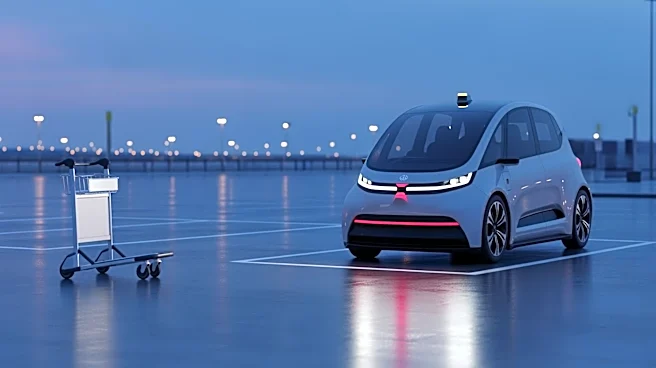
The autonomous vehicle (AV) sector has experienced a significant influx of venture capital funding in 2026, with nearly $19 billion raised globally by April. A substantial portion of this funding, $16 billion, was secured by Alphabet's Waymo, highlighting
its dominant position in the industry. This marks one of the largest funding cycles for the AV sector in over a decade, with the capital being concentrated among fewer competitors compared to previous years. Other notable recipients of funding include Wayve, a UK-based self-driving startup, and Waabi, an autonomous trucking company, which raised $1.5 billion and $750 million, respectively. The trend indicates a shift towards fewer, more established players in the AV market.
Why It's Important?
The concentration of funding in the AV sector reflects a maturing industry where investors are focusing on established companies with proven track records. This shift could lead to accelerated development and deployment of autonomous technologies, potentially transforming transportation and logistics industries. The significant investment in Waymo underscores confidence in its ability to lead the market, which could influence regulatory frameworks and public acceptance of autonomous vehicles. The focus on fewer companies may also drive innovation in 'second-order problems' such as fleet operations and maintenance, further advancing the sector.
What's Next?
As the AV industry continues to mature, we can expect increased collaboration between major players and traditional automotive companies. This could lead to strategic partnerships and mergers, further consolidating the market. Regulatory bodies may also play a crucial role in shaping the future of autonomous vehicles, as they work to establish safety standards and integration into existing transportation systems. The success of companies like Waymo could set benchmarks for others in the industry, influencing investment strategies and technological advancements.