






What's Happening?
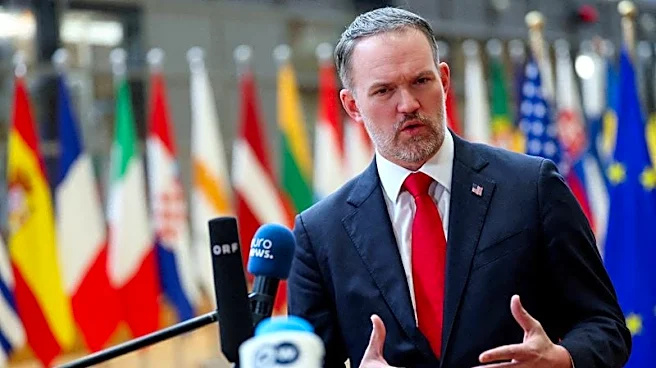
U.S. Trade Representative Jamieson Greer has reaffirmed the commitment of the U.S. and the European Union to their trade agreement, despite new tariff threats over forced labor concerns. The Trump administration has proposed tariffs of up to 12.5% on imports
from 60 economies, including the EU, citing insufficient action against forced labor. The EU has criticized the U.S. findings as unjustified, but both sides remain committed to complying with their trade deal. The proposal is part of a broader strategy to address unfair trade practices and is subject to public comment and hearings.
Why It's Important?
The reaffirmation of the U.S.-EU trade deal is significant as it underscores the importance of maintaining strong economic ties between the two regions. The proposed tariffs could strain these relations and impact global trade dynamics. The EU's criticism of the U.S. findings highlights the challenges in addressing forced labor in global supply chains. The tariffs could also affect diplomatic relations and economic cooperation with key allies, potentially leading to higher costs for consumers and businesses.
What's Next?
The proposed tariffs will undergo a public comment period and hearings before being finalized. The outcome of these measures will depend on international responses and potential legal challenges. The U.S. and the EU will need to navigate complex diplomatic and economic dynamics to achieve their trade objectives. The administration's trade policy will continue to evolve as it seeks to address forced labor and other trade practices.