


What's Happening?
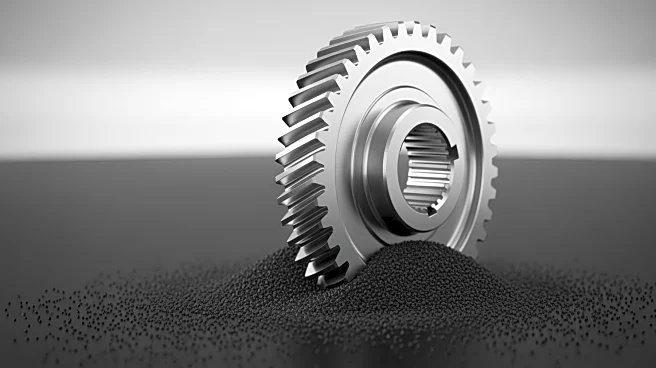
The metal injection molding (MIM) industry is projected to experience substantial growth, reaching a valuation of $7.46 billion by 2030. This growth is driven by advancements in manufacturing technologies and increased demand across various sectors, including
electric vehicles and medical devices. The market is expected to grow at a compound annual growth rate (CAGR) of 9.7% during the forecast period. Key trends include the miniaturization of complex metal parts, increased use of stainless steel and soft magnetic materials, and a focus on cost-effective mass production solutions. Leading companies such as Indo-MIM Private Limited and CMG Technologies Ltd. are driving innovation in the sector, with strategic acquisitions enhancing global footprints.
Why It's Important?
The expansion of the metal injection molding market is significant for several industries, including automotive, electronics, and healthcare. The ability to produce high-volume precision components with minimal post-processing is crucial for meeting the growing demand for lightweight and durable materials. This growth supports the shift towards electric vehicles and the need for scalable mass production methods. Companies investing in advanced technologies are positioned to benefit from increased market share and global reach, particularly in regions like Europe and Asia. The focus on near-net-shape manufacturing and micro-scale accuracy is expected to drive further innovation and efficiency in production processes.
What's Next?
As the metal injection molding market continues to expand, companies are likely to invest in developing cutting-edge technologies to enhance production capabilities. Strategic acquisitions, like Indo MIM's acquisition of CMG Technologies, will play a key role in expanding global reach and meeting the demand for sophisticated metal parts. The establishment of centers of excellence, such as Biomerics' MIM services, will focus on producing complex micro-metal components with tight tolerances. The market segmentation highlights opportunities for growth in various industries, including automotive and consumer goods, as companies seek to leverage the benefits of MIM technology.
Beyond the Headlines
The growth of the metal injection molding market may have broader implications for manufacturing practices and environmental sustainability. The focus on lightweight materials and efficient production processes aligns with global efforts to reduce carbon emissions and improve energy efficiency. As industries adopt MIM technology, there may be increased pressure to develop environmentally friendly materials and processes. Additionally, the demand for precision components could drive advancements in material science and engineering, leading to new applications and innovations in various sectors.