


What's Happening?
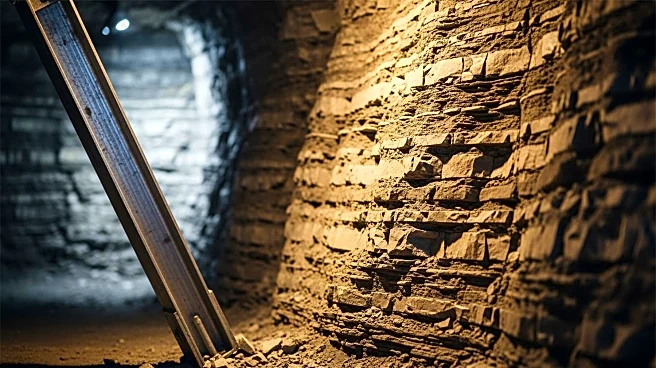
A recent study has explored ground control strategies for managing thick-hard roof conditions in longwall mining, particularly in extra-thick coal seams. Researchers have developed a mechanical model combined with directional hydraulic fracturing to mitigate
the risks associated with thick-hard roof failure. Field tests conducted at a coal mine in Xinjiang, China, demonstrated that this approach could reduce pressure-step distances, ease roof deformation, and improve control in high-risk mining environments. The study highlights the challenges posed by thick-hard roof strata, which resist breaking and store large amounts of elastic strain energy, leading to potential violent failures.
Why It's Important?
The findings of this study are crucial for the mining industry, as they offer a tested strategy to manage the dynamic hazards associated with thick-hard roof behavior in extra-thick coal seam mining. Sudden roof failures can pose significant safety risks to miners and disrupt operations. By providing a method to control energy release and improve roof stability, the study contributes to safer mining practices and potentially enhances productivity. The approach may also influence future research and development in mining technology, focusing on site-specific solutions to address geological challenges.
What's Next?
The study's results may prompt further research to validate the effectiveness of the proposed strategies in different geological settings. Mining companies could consider adopting these methods to improve safety and operational efficiency in mines with similar conditions. Additionally, regulatory bodies might evaluate the study's implications for updating safety standards and guidelines in the mining sector. Collaboration between researchers and industry stakeholders could lead to advancements in mining technology and practices.