




What's Happening?
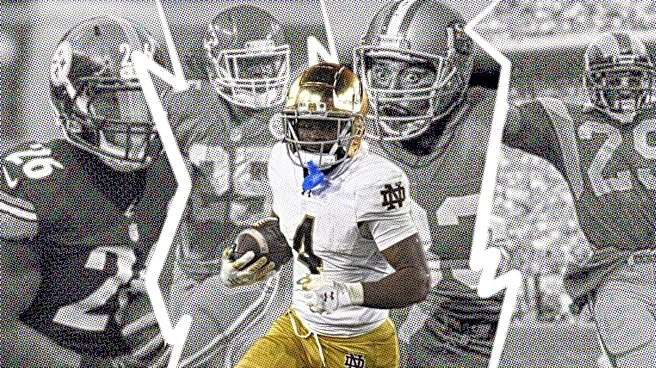
The 2026 NFL Draft has witnessed a significant decline in the number of running backs selected in the first three rounds, with only three players being picked. The Arizona Cardinals selected Jeremiyah Love from Notre Dame as the third overall pick. The Seattle
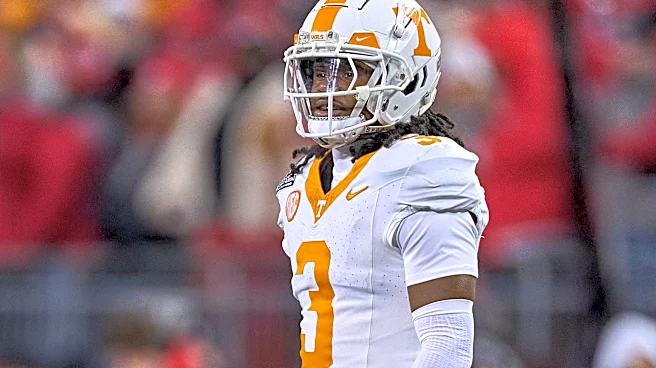
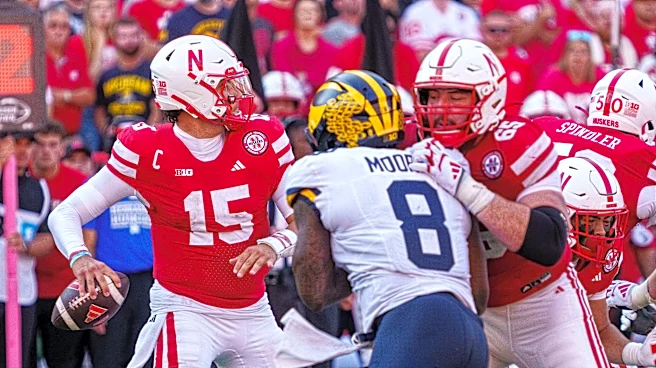
Seahawks followed by choosing Love's college teammate, Jadarian Price, with the 32nd overall pick. The San Francisco 49ers then picked Kaelon Black from Indiana in the third round. This trend highlights a shift in the NFL's valuation of running backs, leaving many talented players available for the later rounds. Notable running backs still on the board include Mike Washington Jr. from Arkansas, Nicholas Singleton and Kaytron Allen from Penn State, and Emmett Johnson from Nebraska, among others.
Why It's Important?
The reduced number of running backs drafted early in the 2026 NFL Draft underscores a broader trend in the league where teams are increasingly prioritizing other positions over running backs. This shift could impact the career trajectories and financial prospects of running backs entering the league, as being drafted in later rounds typically results in lower initial contracts. Additionally, this trend may influence college programs and young athletes to focus on positions perceived as more valuable in the draft. The availability of quality running backs in later rounds could also benefit teams looking to strengthen their rosters without using high draft picks, potentially leading to more strategic and cost-effective team building.
What's Next?
As the draft progresses into rounds four through seven, teams have the opportunity to select from a pool of talented running backs who were not picked in the early rounds. This could lead to a flurry of activity as teams seek to capitalize on the availability of these players. Additionally, many running backs may be signed as undrafted free agents, providing them with a chance to prove their worth during training camps. The ongoing devaluation of the running back position may prompt discussions within the NFL about the future role and compensation of running backs, potentially influencing future draft strategies and player development.