





What's Happening?
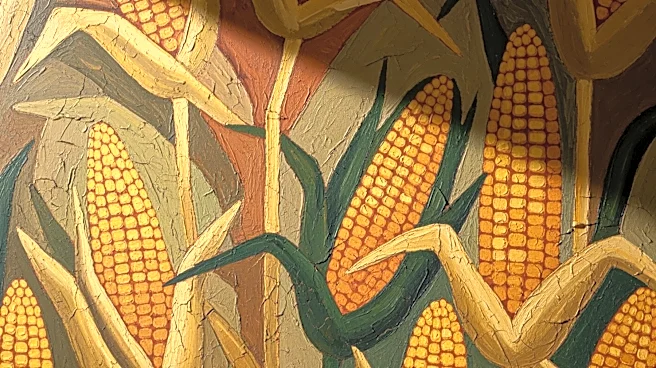
The Sioux City Art Center is set to unveil the restored 'Corn Room' mural by Grant Wood, marking its 100th anniversary. Originally created in 1926 for the Martin Hotel in Sioux City, the mural has undergone extensive conservation work at the Midwest Art Conservation
Center in Minneapolis. The restoration process, which took over a year, involved cleaning and stabilizing the seven-panel artwork, revealing vibrant colors and details that had faded over time. The mural, a significant piece of Wood's early work, will be the centerpiece of the exhibition 'Pasture to Present: Grant Wood's Corn Room and New Visions of Rural America,' opening on June 13. This exhibition will also feature other works by Wood and contemporary artists exploring themes of rural life.
Why It's Important?
The restoration and exhibition of Grant Wood's 'Corn Room' mural highlight the enduring cultural and historical significance of regionalist art in America. Wood, best known for his iconic painting 'American Gothic,' played a pivotal role in defining the visual narrative of rural America. The mural's restoration not only preserves a piece of art history but also revitalizes interest in Wood's work and its relevance to contemporary discussions on agriculture, community, and identity. The exhibition aims to connect past and present, offering insights into the evolution of rural life and its artistic representation. This event underscores the importance of art conservation and the role of cultural institutions in maintaining and celebrating national heritage.
What's Next?
Following the unveiling, the 'Corn Room' mural will remain a permanent part of the Sioux City Art Center's collection. The exhibition 'Pasture to Present' will run until December 6, providing an opportunity for visitors to engage with both historical and modern interpretations of rural America. The exhibition includes works on loan from various institutions, addressing current issues such as climate change and industrial agriculture. The Art Center's initiative may inspire further conservation efforts and exhibitions, fostering a deeper appreciation for regionalist art and its impact on American culture.