




What's Happening?
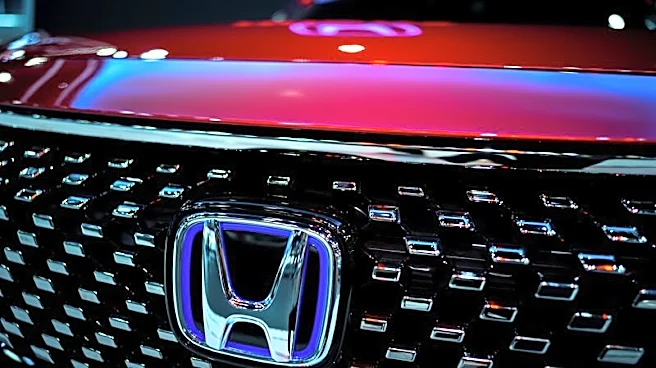
Honda North America is pivoting its strategy towards hybrid vehicles after incurring a $9 billion loss from its electric vehicle (EV) business. The company announced plans to introduce 15 new hybrid models by 2030, including a full-size SUV aimed at the
D-segment market. This shift comes as Honda cancels several EV models initially planned for production in Ohio and through a joint venture with Sony, due to restructuring costs and a decline in demand. Honda's CEO, Toshihiro Mibe, emphasized the company's commitment to hybrid technology, which requires fewer expensive battery materials compared to full EVs. The first of these new hybrid models is expected to debut next year.
Why It's Important?
This strategic shift by Honda highlights the challenges automakers face in the evolving automotive market, particularly in the U.S. where policy changes have impacted EV sales. The move towards hybrids could help Honda mitigate losses by leveraging its existing strengths in hybrid technology, which is seen as a more cost-effective and resource-efficient alternative to full EVs. This decision could influence other automakers to reconsider their EV strategies, especially in light of fluctuating government policies and market demands. The focus on hybrids may also affect the supply chain dynamics, particularly in the battery materials sector.
What's Next?
Honda plans to accelerate the development and market launch of its hybrid models, reallocating resources to ensure a competitive edge. The company aims to improve fuel efficiency by 10% and reduce costs by 30% for its new hybrid systems. As Honda navigates this transition, it will be crucial to monitor how the market responds to these new models and whether other automakers will follow suit. Additionally, Honda's ability to return to profitability will depend on the successful execution of its hybrid strategy and the broader market's acceptance of hybrid vehicles as a viable alternative to EVs.