







What's Happening?
Elon Musk, co-founder of OpenAI, reached out to the company's president, Greg Brockman, with a settlement proposal just two days before their lawsuit was set to go to trial. The lawsuit, filed by Musk in 2024, accuses OpenAI, Brockman, and CEO Sam Altman
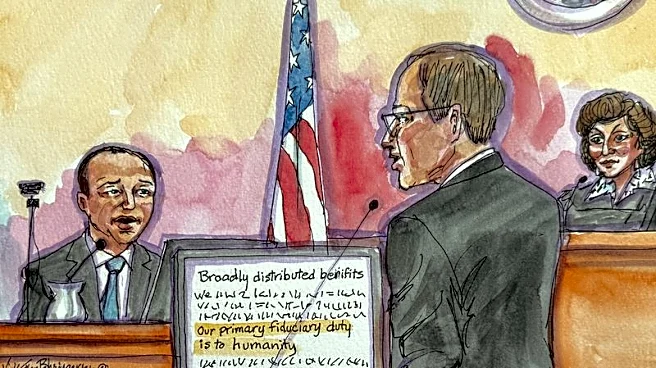
of deviating from their original commitment to keep the company a nonprofit with a charitable mission. In a text message, Musk suggested both parties drop their claims, warning that failure to settle could lead to public backlash. The trial began last week in Oakland, California, with Brockman expected to testify soon. OpenAI's legal team plans to use Musk's text as evidence to demonstrate his motives in the lawsuit.
Why It's Important?
This legal battle highlights the tensions between Musk and OpenAI, a company he helped establish. The outcome of this case could have significant implications for the governance and operational structure of AI companies, particularly those transitioning from nonprofit to for-profit models. Musk's allegations raise questions about the ethical responsibilities of AI organizations and their adherence to founding principles. The trial's proceedings could influence public perception of AI companies and their leaders, potentially affecting investor confidence and regulatory scrutiny in the tech industry.
What's Next?
As the trial progresses, key testimonies, including that of Greg Brockman, will be crucial in determining the case's outcome. The court's decision could set a precedent for how AI companies balance profit motives with ethical commitments. Depending on the verdict, there may be increased calls for transparency and accountability in the AI sector. Stakeholders, including investors and policymakers, will be closely monitoring the trial for its potential impact on the future of AI governance and industry standards.