



What's Happening?
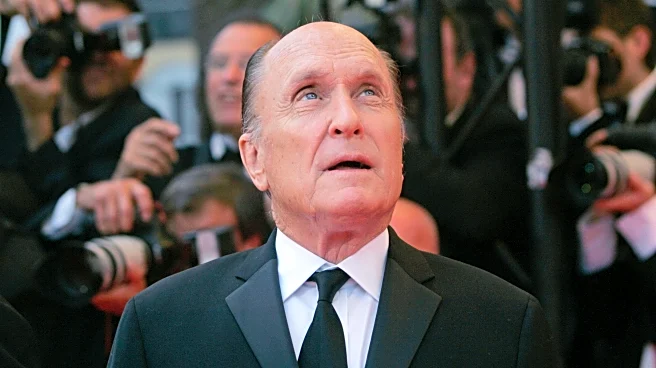
Robert Duvall, the legendary actor known for his diverse roles, passed away at the age of 95. Duvall made his film debut in the 1962 classic 'To Kill a Mockingbird,' where he played the character Arthur 'Boo' Radley. Despite appearing in only one scene, his portrayal left a lasting impression. Mary Badham, who played Scout Finch in the film, shared her memories of working with Duvall. She recalled the unique approach taken by director Robert Mulligan, who kept the actors apart until their scene together to enhance the authenticity of their interaction. Badham, who was just 10 years old at the time, described Duvall as perfect for the role and admired his acting skills. Her reflections highlight the impact Duvall had on his co-stars and the film industry.
Why It's Important?
Robert Duvall's passing marks the end of an era for Hollywood, as he was one of the few remaining actors from a golden age of cinema. His role in 'To Kill a Mockingbird' is a testament to his ability to leave a profound impact with minimal screen time. Duvall's career spanned decades, influencing countless actors and filmmakers. His work in 'To Kill a Mockingbird' is particularly significant as the film is a cultural touchstone, addressing themes of racial injustice and moral growth. Duvall's portrayal of Boo Radley contributed to the film's enduring legacy, making his passing a moment of reflection for the industry and audiences alike.
What's Next?
As the film industry reflects on Robert Duvall's legacy, there may be renewed interest in his body of work, including 'To Kill a Mockingbird.' Film retrospectives and tributes are likely to be organized, celebrating his contributions to cinema. Additionally, discussions around the themes of 'To Kill a Mockingbird' may resurface, as the film continues to be relevant in contemporary conversations about race and justice. Duvall's passing may also inspire a new generation of actors to explore his films and learn from his performances.
Beyond the Headlines
Robert Duvall's role in 'To Kill a Mockingbird' highlights the power of subtlety in acting. His ability to convey depth and emotion with limited dialogue is a masterclass in performance. This approach challenges the notion that impactful acting requires extensive screen time or dialogue. Duvall's career serves as a reminder of the diverse paths to success in Hollywood, emphasizing the importance of versatility and dedication to craft. His legacy will likely influence acting techniques and storytelling approaches for years to come.