
What's Happening?
Juno Propulsion has announced the successful acquisition of $1.4 million in pre-seed funding to advance its rotating detonation engine (RDE) project, known as Project Iris. The funding round was led by
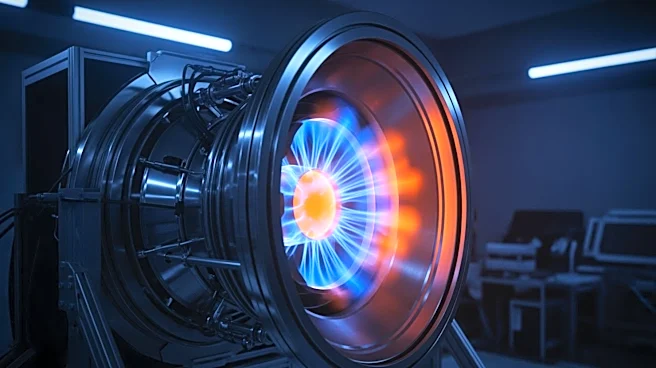
SOSV, with participation from several other investors including Hypernova and Leslie Ventures. The funds will be used to complete the development of the Iris engine, which is set to be the first commercial RDE system to propel a satellite in orbit. Scheduled for a demonstration mission in 2027, the engine will be tested onboard a Momentus satellite bus. Juno's RDE technology promises higher combustion efficiency and uses safer, more cost-effective propellants compared to traditional systems.
Why It's Important?
The development of Juno's RDE technology represents a significant advancement in satellite propulsion systems. By utilizing nitrous oxide and ethane, the engine offers a safer and more economical alternative to the toxic hydrazine commonly used in the industry. This innovation could lead to more sustainable and cost-effective space missions, potentially lowering barriers for satellite deployment and operation. The successful demonstration of this technology could position Juno as a leader in the space propulsion market, influencing future satellite design and mission planning.
What's Next?
Juno plans to scale its production capabilities to manufacture multiple engines annually, aiming to reach the highest technology readiness level before full-scale production. The company is also focused on expanding its product lines, which could lead to further innovations in space propulsion. As Juno prepares for its 2027 demonstration mission, the company will likely continue to attract interest from investors and partners in the aerospace industry.