






What's Happening?
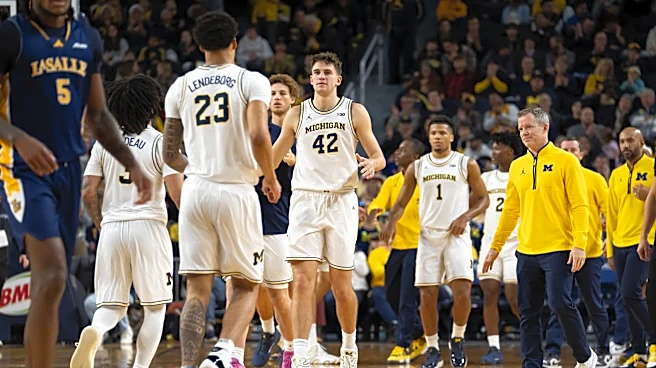
The 2026 NCAA Men's Basketball Tournament has highlighted the significant role of transfer players in shaping the dynamics of the Final Four teams. With the transfer portal allowing athletes to move between schools without sitting out a year, players like
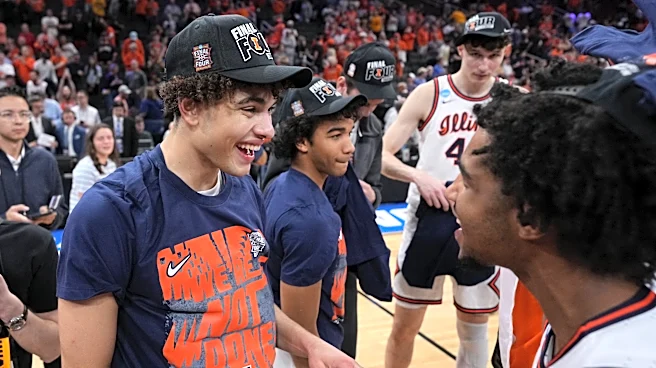
Yaxel Lendeborg of Michigan and Jaden Bradley of Arizona have become pivotal to their teams' successes. Lendeborg, a former Alabama-Birmingham standout, has excelled at Michigan, averaging impressive stats and leading his team to the Final Four. Similarly, Bradley, who transferred from Alabama to Arizona, has become a key player, earning Big 12 Player of the Year honors. The trend of utilizing transfer players is evident across the Final Four teams, including UConn and Illinois, where players like Tarris Reed Jr. and Kylan Boswell have made significant impacts.
Why It's Important?
The increasing reliance on transfer players in college basketball reflects a shift in how teams are built, emphasizing immediate impact over long-term development. This trend has implications for recruitment strategies, as schools may prioritize attracting experienced players from other programs over developing high school recruits. The ability of transfer players to contribute immediately has altered competitive dynamics, potentially leveling the playing field for teams that can effectively utilize the transfer portal. This shift also impacts the traditional college basketball experience, as players are less likely to spend their entire collegiate careers at one institution, affecting team cohesion and fan engagement.
What's Next?
As the NCAA Final Four progresses, the performance of transfer players will be closely watched, potentially influencing future recruitment and team-building strategies. Coaches may increasingly focus on scouting and securing top transfer talent to remain competitive. Additionally, the NCAA may consider further regulations or adjustments to the transfer portal system to balance player mobility with team stability. The outcomes of the Final Four could serve as a case study for the effectiveness of transfer-heavy rosters, shaping the future landscape of college basketball.