
What's Happening?
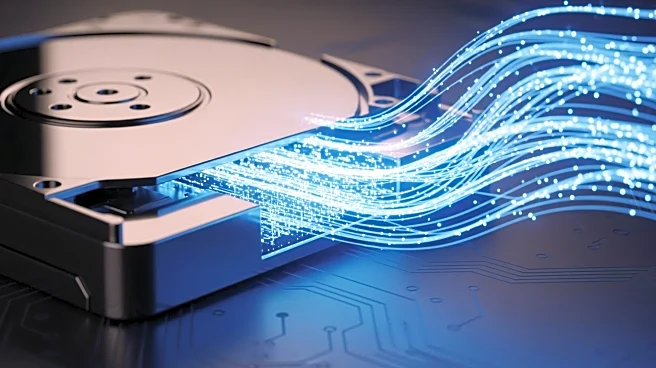
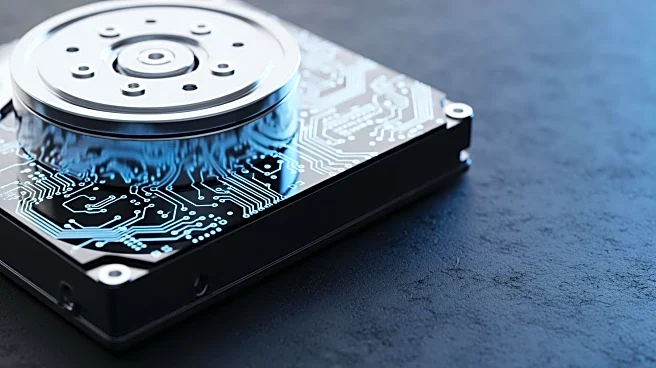
Western Digital, a leading manufacturer of hard disk drives (HDDs), has announced that its supply for the year 2026 is already sold out. This development is attributed to the increasing demand from artificial intelligence (AI) companies, which are purchasing PC components in bulk. According to Irving Tan, CEO of Western Digital, the company has received firm purchase orders from its top seven customers, primarily cloud businesses, which account for 89% of its revenue. The demand for HDDs is partly driven by the rising costs of solid-state drives (SSDs), which are now significantly more expensive than HDDs for the same storage capacity. This has led data centers to consider using a mix of both storage solutions. The trend mirrors previous patterns
seen in the memory product market, where companies like Micron have shifted focus to supplying AI data centers.
Why It's Important?
The surge in demand for HDDs due to AI applications highlights the growing influence of AI on the technology supply chain. As AI companies prioritize their needs, consumer access to HDDs may become limited, potentially leading to increased prices for PCs and smartphones. TrendForce predicts a 15% rise in PC prices and a 10% increase in smartphone prices this year. Major manufacturers such as HP, Dell, and Lenovo have already announced price hikes, with Samsung indicating similar intentions. This situation underscores the broader economic impact of AI on consumer electronics, as companies adjust their strategies to cater to enterprise clients over individual consumers.
What's Next?
As AI continues to drive demand for technology components, manufacturers may increasingly prioritize enterprise clients, potentially exacerbating supply shortages for consumers. This could lead to further price increases in consumer electronics. Companies may also explore alternative strategies, such as diversifying their supply chains or investing in new technologies to meet the growing demand. Additionally, the trend of using a mix of HDDs and SSDs in data centers may continue, as organizations seek cost-effective storage solutions.