



What's Happening?
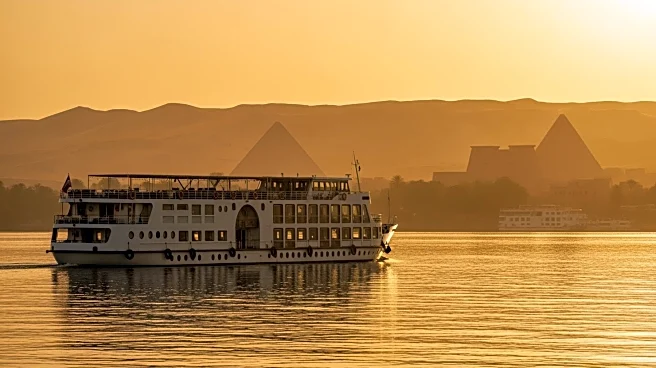
Mandarin Oriental is set to expand its presence in Egypt by managing two iconic hotels and introducing a luxury Nile cruise. The expansion includes the historic Old Cataract hotel in Aswan and the Winter Palace in Luxor, both undergoing significant renovations before reopening in 2027. The luxury river cruise, developed by K.G. Company for Real Estate and Tourism Investment, part of Garranah Group, will offer itineraries between Luxor and Aswan. This initiative aims to create a seamless journey that combines land and river experiences, celebrating Egypt's cultural and historical richness. The project is a collaboration with Talaat Moustafa Group (TMG) Holding, leveraging their local expertise alongside Mandarin Oriental's renowned service.
Why It's Important?
This
expansion by Mandarin Oriental highlights the growing interest in luxury tourism in Egypt, a country with a rich cultural heritage and increasing global tourism appeal. By integrating luxury accommodations with a unique river cruise, the project aims to set a new benchmark for tourism in the region. This development could significantly boost Egypt's tourism sector, attracting high-end travelers and potentially increasing economic activity in the hospitality industry. The collaboration with local developers like TMG Holding and Garranah Group underscores the importance of combining international standards with local expertise to enhance the tourism experience.
What's Next?
The hotels and cruise are scheduled to open in 2027, with the Old Cataract hotel in Aswan beginning operations in May 2026. The Winter Palace in Luxor will close for renovations in early 2026. As these projects progress, they are expected to attract significant attention from luxury travelers and could inspire similar developments in other culturally rich regions. Stakeholders in the tourism and hospitality sectors will likely monitor the project's impact on Egypt's tourism industry closely.
Beyond the Headlines
The expansion into Egypt by Mandarin Oriental could influence the broader luxury tourism market by setting new standards for integrating cultural heritage with luxury experiences. This approach may encourage other hospitality brands to explore similar ventures in historically significant locations, potentially leading to a shift in how luxury tourism is perceived and delivered globally.