






What's Happening?
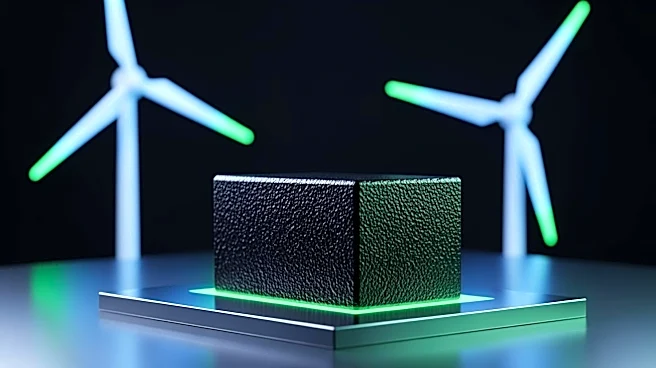
Antora Energy, a California-based startup, has developed an innovative energy storage system using specialized carbon blocks to store excess energy from wind or solar farms. This system, which has been likened to a giant toaster oven, is part of a significant
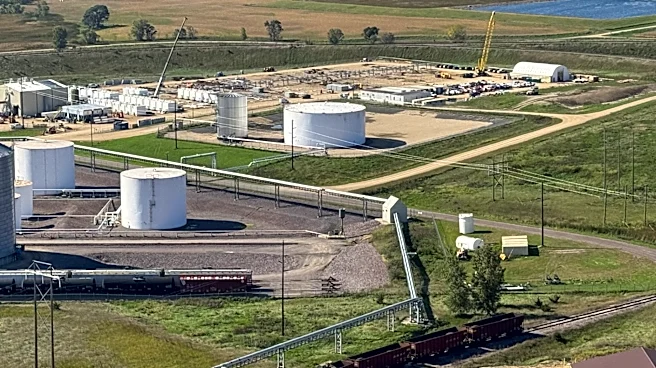
energy storage project in South Dakota. The project aims to reduce the natural gas consumption of POET's Big Stone City ethanol plant by utilizing excess wind power during off-peak hours. The carbon blocks in the system heat up and emit light when charged, allowing them to discharge electricity or produce high heat for industrial processes. This dual-purpose capability is facilitated by thermophotovoltaic (TPV) cells, which convert the infrared light emitted by the superheated carbon blocks into electricity. Antora Energy's system is designed to provide a reliable, on-demand source of zero-carbon heat and power, addressing the issue of wind power curtailment due to low demand.
Why It's Important?
The development of Antora Energy's storage system is significant for the U.S. renewable energy sector as it addresses the challenge of wind power curtailment, where excess energy is wasted due to low demand. By storing and utilizing this excess energy, the system enhances the economic value of existing wind farms and supports the continued growth of wind power, which currently accounts for 12% of the U.S. electricity supply. This innovation not only helps reduce reliance on fossil fuels but also aligns with broader efforts to decarbonize the energy grid. The project demonstrates the potential for renewable energy storage solutions to provide consistent power supply, regardless of weather conditions, thereby supporting industrial operations and reducing greenhouse gas emissions.
What's Next?
Antora Energy is expanding its manufacturing capabilities with a pilot facility in Sunnyvale, California, and a full-scale plant in San Jose. The company aims to produce thermal batteries that can be shipped and installed at industrial sites across the U.S., offering a drop-in solution for decarbonization. The storage system at POET's facility is expected to be fully operational by October, providing a model for future projects. As wind power continues to grow, similar storage solutions could be implemented nationwide, further integrating renewable energy into the U.S. power grid and reducing the country's carbon footprint.
Beyond the Headlines
The success of Antora Energy's system could have broader implications for the renewable energy industry, potentially leading to increased investment in similar technologies. The ability to store and dispatch renewable energy on demand could transform how energy is managed and consumed, promoting a shift towards more sustainable industrial practices. Additionally, the development of TPV technology, which has historically been limited by high costs and low efficiency, could see renewed interest and innovation, further advancing the capabilities of renewable energy systems.